 Nothing found for the request


 Gaming software
 Platforms
 Sports betting
 Equipment
 Services
 Traffic
 Payment solutions
 Other products
 Additional Software
How to Start a Bitcoin Casino in Canada: Key Steps and What to Expect
Sologe December 9, 2025
Share:


Bitcoin casinos are becoming a natural part of Canada’s online gambling scene, mostly because players here already trust digital payments and enjoy quick, uncomplicated withdrawals. The shift toward crypto didn’t happen overnight, but it’s clear why it stuck: the mix of privacy, speed, and global access feels like a good fit for modern gaming habits. If you’re thinking about building a casino that accepts Bitcoin from day one, the path is doable, but it does call for careful setup and a bit of strategic thinking. Here’s a grounded look at what goes into launching one that actually works in the Canadian market.
Why Canada Makes Sense for a Bitcoin Casino (And What the Law Says)
Canada’s relationship with crypto and online gambling sits in a balanced middle ground. It’s regulated enough to keep things structured, but not so restrictive that new businesses can’t enter. Provinces like Ontario already oversee online casinos, and there’s no federal rule that bans using Bitcoin for gambling. The main variable is where you base your operation and which audience you’re allowed to serve.
The market itself is appealing for practical reasons. Canadians are comfortable with digital payments, crypto ownership is fairly widespread, and local players value quick withdrawals and privacy. It’s a crowd that understands wallets, prefers fast transactions, and doesn’t mind trying tech-forward platforms.
A few points that make Canada stand out:
- Strong crypto adoption and a steady base of Bitcoin users
- Established online gambling culture, especially in regulated provinces
- Flexible business routes, including offshore licensing for broader markets
- Player behavior aligned with crypto gaming: speed, convenience, anonymity
On the legal side, most operators choose a license from a crypto-friendly jurisdiction like Curaçao or Anjouan, then apply clear compliance measures for Canadian traffic. It’s a workable model, as long as you respect local regulations and build proper KYC and AML controls into the platform.
Understanding the Difference: Bitcoin Casinos vs Blockchain Casinos
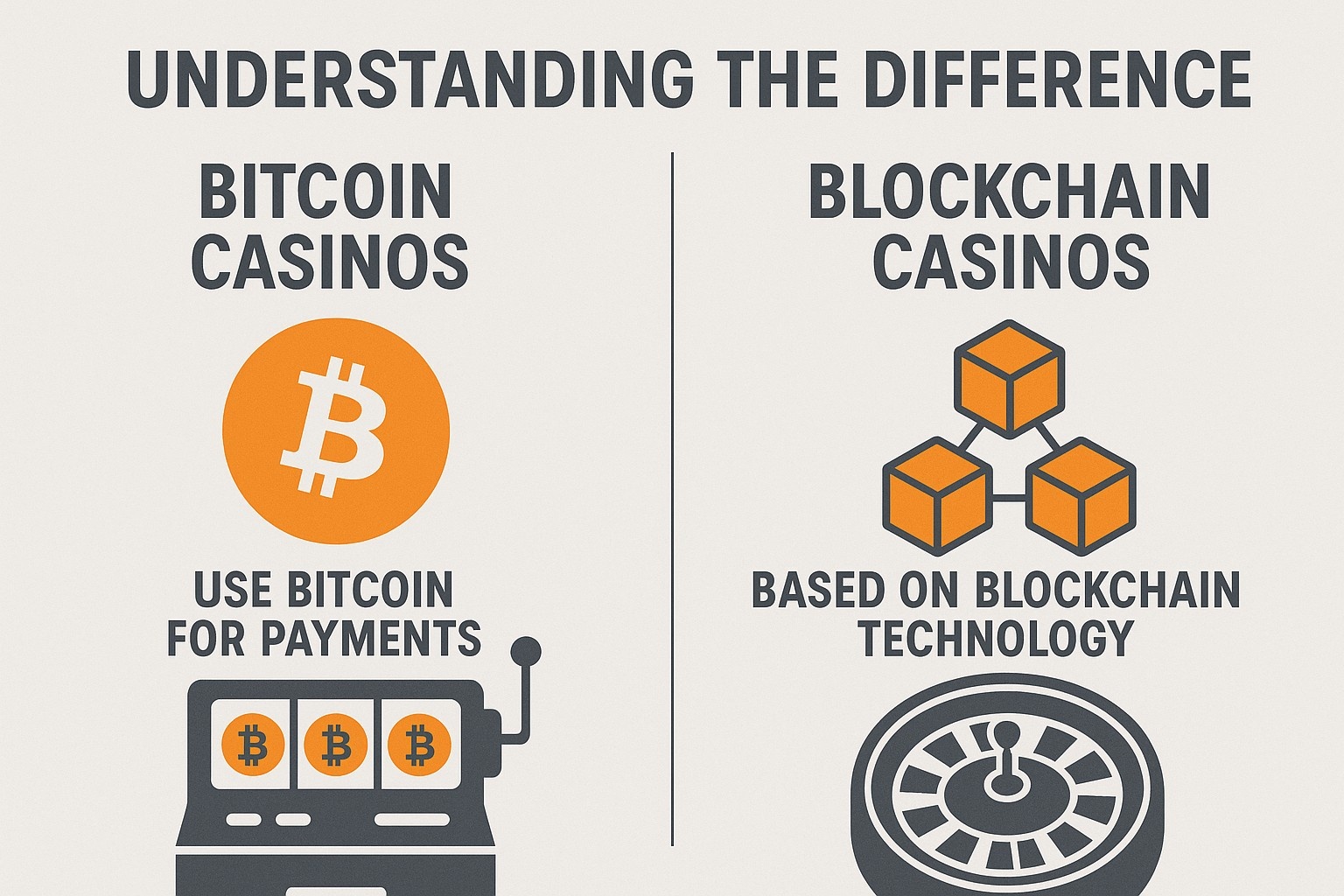
Not all crypto casinos work the same way. Two main models dominate the space: Bitcoin casinos and blockchain casinos. The gap between them isn’t just technical – it affects how users interact, how games are run, and how the business operates.
Bitcoin Casinos
A Bitcoin casino looks and feels like any traditional online casino. Players sign up with an email, deposit Bitcoin (or other supported cryptocurrencies), and start playing. The key difference is that crypto is used for payments – deposits, wagers, withdrawals – but the core of the platform remains centralized.
Game results, user balances, and account data are still stored and managed by the platform itself. This model is popular because it’s familiar, easier to scale, and doesn’t require rebuilding the entire casino on blockchain infrastructure.
Key traits:
- Accepts Bitcoin, Ethereum, and other coins as payment
- Centralized backend (like a regular casino)
- Players use accounts and wallets managed by the operator
- Fast to launch, easier to regulate
Blockchain Casinos
Blockchain casinos take things a step further. Instead of just using crypto for payments, the entire casino runs on blockchain technology. That means games are powered by smart contracts, transactions are recorded on-chain, and users don’t need to create traditional accounts. They just connect a wallet like MetaMask and play directly from it.
These platforms emphasize transparency – every roll, win, or payout can be verified. But they also come with more complexity. They’re appealing to tech-savvy users, but may feel unfamiliar or risky to casual players.
Key traits:
- Fully decentralized, runs on smart contracts
- No central operator managing user balances
- No login or registration – just wallet connection
- Transparent but complex; built for experienced crypto users
Most projects start with a Bitcoin casino approach because it’s more practical and easier to fit into existing legal frameworks, especially in markets like Canada. Blockchain casinos are exciting, but they’re a niche play – and not always the right starting point if you’re new to iGaming.
Key Steps to Launch a Bitcoin Casino
Starting a Bitcoin casino isn’t just about plugging in crypto payments and calling it a day. There’s real infrastructure behind it – from licensing and platform setup to user acquisition and day-to-day risk management. Here’s how to move from idea to launch without skipping the essentials.
1. Do Your Market Homework First
Before anything technical, you need to understand who you’re building for. Bitcoin gamblers aren’t the same as traditional players. They value speed, privacy, and control. They’re usually younger, often male, and more active in crypto forums than on Facebook ads.
Ask yourself:
- Who is my target player – Canadian crypto natives, international bettors, or both?
- What games do they actually play?
- Are there underserved niches (e.g., mobile-first, crash games, NFT rewards)?
- Which platforms are already doing this well, and where are their blind spots?
Good research here saves time (and money) down the line.
2. Secure a Gambling License
Even if you’re launching offshore, you’ll need a proper license. It’s not just about legality – it’s also about trust. Players don’t deposit Bitcoin into sketchy platforms anymore. They want some kind of regulatory backing.
Popular licensing jurisdictions for crypto casinos include:
- Curaçao: Widely used, quick to set up, and relatively affordable
- Anjouan (Comoros): Fast and crypto-friendly, though newer on the scene
- Malta or Isle of Man: High trust but high cost; better suited for scale-ups
Each option comes with trade-offs around cost, speed, and access to payment processors. Choose based on your goals and where your traffic is coming from.
3. Pick the Right Software Partner
The tech stack makes or breaks the experience. A solid crypto casino platform should handle way more than just deposits.
Look for providers that offer:
- Multi-coin wallet support (BTC, ETH, USDT, etc.)
- Provably fair gaming integration
- Optional fiat conversion for games that don’t support crypto directly
- Backend dashboards for managing users, payouts, and game data
- Affiliate system or CRM if you’re serious about scaling
White-label platforms can speed things up, but check for customization limits. You don’t want to launch with a clone of someone else’s casino unless your branding is airtight.
4. Integrate Crypto Payments (Without the Headache)
Payment flows need to be smooth or players will bounce fast.
You’ll want both:
- Custodial wallet options – for users who don’t want to manage private keys
- Non-custodial support – for experienced players who prefer full control
Use a payment processor like CoinsPaid, NowPayments, or Mercuryo to handle the backend. These tools take care of wallet creation, conversion, and compliance – so you don’t need to rebuild the wheel.
Also, make sure you support:
- Fast deposits and near-instant withdrawals
- Stablecoin options (like USDT or USDC) to help players avoid volatility
- Layer-2 networks (Polygon, Arbitrum) to cut gas fees
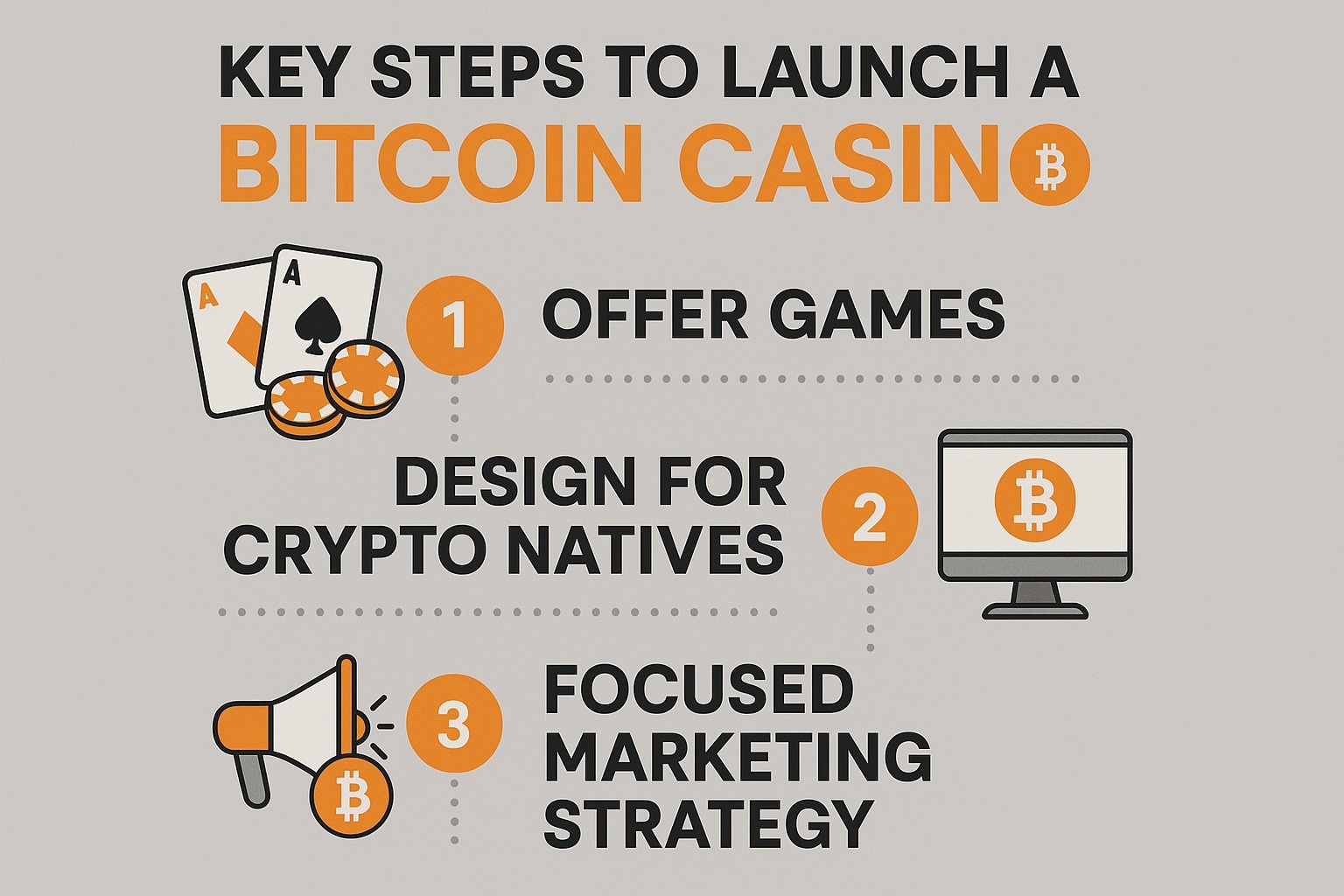
5. Offer Games That Fit the Crypto Audience
You can’t just throw any old slots into a crypto casino. Some providers still don’t support blockchain-based payments – or the math behind “provably fair” gaming.
Top games that perform well with crypto users include:
- Dice and crash games (fast-paced, transparent)
- Blackjack and roulette with live dealer streams
- Slots with high RTP and visual appeal
- Plinko, keno, and other simple games with social shareability
Popular crypto-friendly providers include BGaming, BetSoft, Evolution, Platipus, and Spribe.
6. Design for Crypto Natives
Your site shouldn’t feel like a recycled fiat casino template. The design needs to speak to a younger, more tech-aware crowd.
That means:
- Mobile-first layout
- Dark mode or minimalist UI
- Wallet-based login options
- Real-time balance display (in crypto, not fiat)
UX is part of your credibility. If your platform feels outdated or clunky, people will assume the security is too.
7. Build a Focused Marketing Strategy
Crypto casinos don’t win with Google Ads or standard affiliate banners. You’ll need to dig into niche channels and meet players where they already are.
Smart strategies include:
- Partnering with crypto influencers and streamers
- Building presence in Telegram, Discord, and Reddit communities
- Running token-based loyalty programs or NFT rewards
- Offering transparent, fair bonuses (in BTC or stablecoins – not just vague percentages)
The best crypto casinos grow through word of mouth, not polished TV ads. Focus on trust, fast payouts, and a reason to come back.
Managing Volatility and Risk in Crypto Casinos
Crypto’s biggest strength – being decentralized and fast – is also where the chaos comes in. Prices can swing wildly, and while that doesn’t affect gameplay directly, it does mess with how players think. Some cash out the moment the market dips. Others keep betting, hoping for a rebound. That kind of unpredictability can throw off your flow if you’re not ready for it.
The best way to handle it is by adding a few safety nets. Let players switch to stablecoins like USDT to avoid holding volatile tokens. Use flexible betting limits, especially during big market shifts. And keep an eye on payout behavior – if people start rushing the exit, you’ll want systems in place to handle spikes without stress.
Most Popular Cryptocurrencies for Canadian Bitcoin Casinos
Players in Canada aren’t just sticking with Bitcoin anymore. The crypto crowd here is diverse, and most expect multi-coin support as a baseline. If you’re building a Bitcoin casino for this market, offering just one coin won’t cut it. Here’s what users are actually using – and why it matters:
- Bitcoin (BTC): Still the go-to for many. Recognized, trusted, and widely used in crypto casinos. Slow at times, but players are familiar with how it works.
- Ethereum (ETH): Popular for players who also dabble in NFTs or DeFi. Gas fees can be a pain, but it’s supported by most smart contract games.
- Tether (USDT): A stablecoin that holds its value. Great for players who want to avoid wild swings. Commonly used for bonuses, payouts, or safer long sessions.
- USD Coin (USDC): Another stablecoin, often seen as slightly more “institutional.” It’s a solid option for Canadian users who want predictability.
- Binance Coin (BNB): Lower fees and fast transactions. Gaining traction with users who play on the BNB Chain ecosystem.
- Dogecoin (DOGE): Still has a loyal following. Less common for big bets, but some players enjoy it for fun, smaller wagers.
- Solana (SOL): Known for speed and cheap transactions. Popular among users who want near-instant play without high gas costs.
Most players expect at least BTC, ETH, and USDT. Supporting a wider set of coins doesn’t just add flexibility – it shows you understand the ecosystem and the people in it.
Key Compliance Tips for Canadian Operators
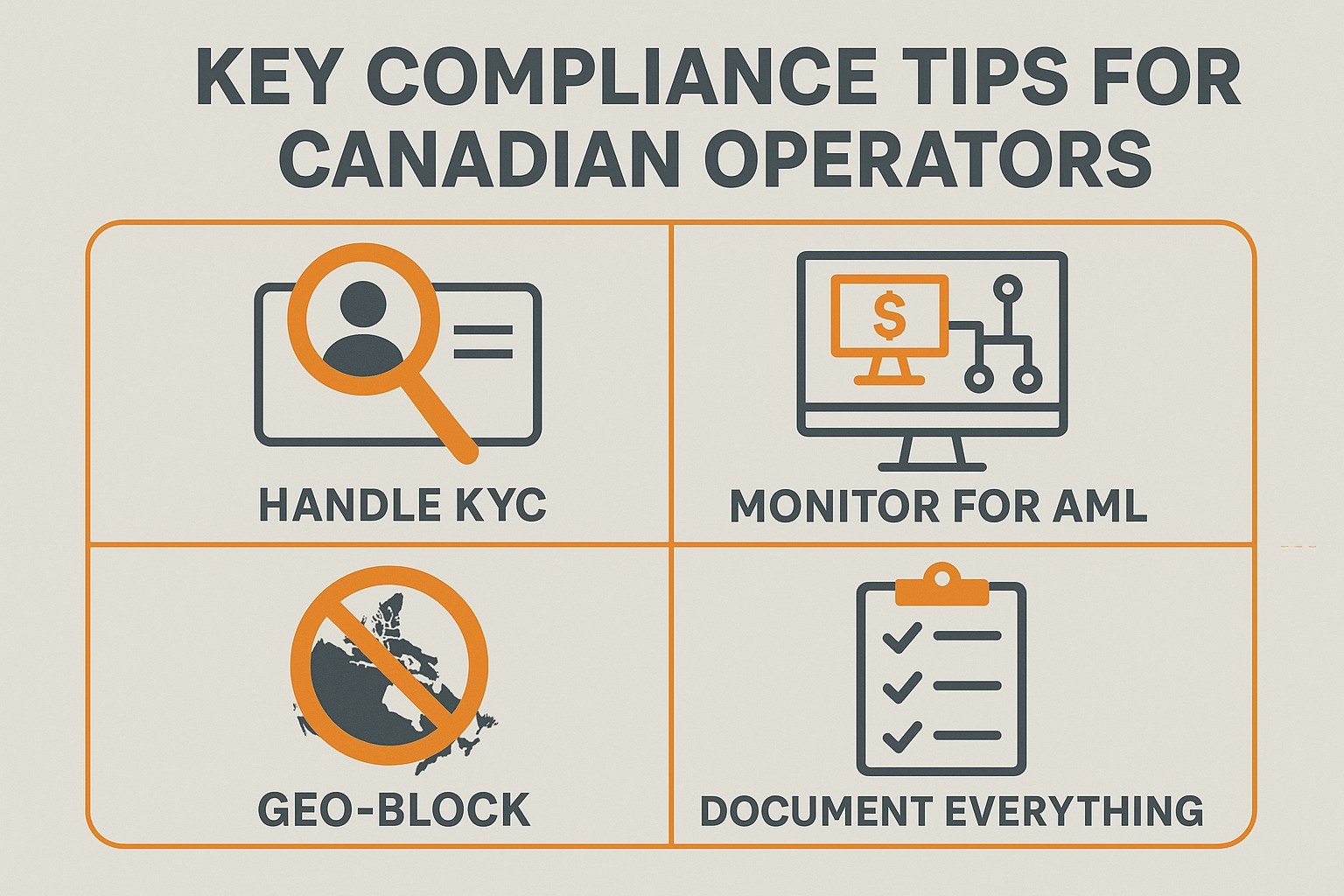
Running a Bitcoin casino from – or for – Canada means stepping carefully. It’s not about dodging rules, it’s about building something that lasts. Here’s what needs to be baked into your setup if you want to stay legit and keep the doors open.
Handle KYC Without Killing Anonymity
Crypto players like privacy. Regulators want verification. You’ll need to find the middle ground. Most casinos now use tiered KYC: players can deposit and play up to a certain limit before triggering ID checks.
Tools like Sumsub or Jumio can handle this smoothly. The goal is to stay compliant without creating friction for casual users. Make it fast, clear, and as hands-off as possible – until it legally can’t be.
Monitor for AML Without Guesswork
Bitcoin may feel anonymous, but every transaction lives on a blockchain. That’s a blessing if you use the right tools. Services like Chainalysis or Elliptic let you flag shady wallets, detect patterns, and comply with Anti-Money Laundering rules without reinventing the wheel.
Set up alerts for big withdrawals, unusual behavior, or users bouncing across multiple wallets. This isn’t just about checking a box – it protects your platform when things get messy.
Geo-Block Where You’re Not Allowed
If you’re not licensed in a certain province or country, you need to keep those users out. That means IP filtering, VPN detection, and a bit of discipline. It’s easy to overlook, but failing here can get you blacklisted fast.
Use tools that recognize proxy networks and block high-risk regions automatically. And make sure your payment systems don’t accidentally sneak around these limits – it’s a common mistake.
Document Everything
Audits are a pain if you’re not ready. Keep clear policies for payouts, disputes, KYC decisions, and how your platform handles risk. This doesn’t have to be overly complex, but it does need to exist – and it needs to be updated as rules shift.
If you ever end up talking to a regulator (or worse, a bank), having these docs ready shows you’re serious and organized – not just another anonymous crypto site trying to slide under the radar.
Compliance in the crypto casino space isn’t just about legal survival. It’s a trust signal. Canadian players want to know the platform they’re using isn’t going to vanish overnight. Build with that in mind, and you’ll avoid most of the usual drama.
Conclusion
Starting a Bitcoin casino in Canada isn’t just some future idea – it’s something that can actually be done now, if you’re ready to handle the moving parts. It’s a mix of smart planning, legal awareness, and understanding how crypto users think. Get those pieces aligned, and you’re not just building a casino – you’re creating something that speaks to a different kind of player. One who wants speed, control, and zero friction.
The real edge comes from knowing the landscape: what games work, which coins matter, how Canadian compliance works, and where the trust lines are drawn. If you respect the space – and don’t rush it – you’ve got a shot at launching something that doesn’t just go live, but sticks.
FAQ
1. Is it legal to run a Bitcoin casino in Canada?
It depends where and how. Provinces like Ontario have strict licensing rules, so you either need to operate under their framework or set up offshore with proper geoblocking and compliance measures in place. There’s no blanket federal ban on crypto casinos, but you do need to tread carefully.
2. Can I accept players from across Canada?
Only if you’re licensed where they live, or if you’re based offshore and block regions you’re not authorized to serve.
3. How do I handle payments with Bitcoin?
Most casinos integrate a crypto processor like CoinsPaid to handle deposits, conversions, and withdrawals. You’ll also need a wallet system – either custodial or user-controlled – plus tools to manage volatility and flag risky transactions.
4. What games work best for Canadian crypto users?
Canadians using crypto lean toward quick, transparent games like dice, crash, blackjack, and slots with high RTP. Many also look for provably fair systems or smart contract-based gameplay that gives them more control over outcomes.
Related Articles

March 17, 2026Los principales eventos de afiliados del...
March 17, 2026Крупнейшие мероприятия в сфере игорного...