 Nothing found for the request


 Gaming software
 Platforms
 Sports betting
 Equipment
 Services
 Traffic
 Payment solutions
 Other products
 Additional Software
What makes P2P payments a smart move for iGaming operators
Sologe December 14, 2025
Share:


Discover how P2P payment methods are transforming iGaming by reducing costs, expanding reach, and improving transaction speed — without sacrificing compliance.
iGaming platforms today face increasing pressure to reduce transaction costs, expand into underserved markets, and deliver seamless user experiences — while remaining compliant across borders. One solution gaining serious traction is peer-to-peer (P2P) payments. These systems remove unnecessary intermediaries, accelerate transaction speed, and offer greater control over fund flows. But with opportunity comes complexity.
In this article, we examine how P2P payment methods are reshaping financial infrastructure in gaming — from key functional benchmarks to critical compliance considerations — and what operators must assess before integrating these tools into their platforms.
Why P2P payments matter in iGaming
In traditional systems, players often rely on centralised banks or intermediaries, which can result in delays and high transaction fees. P2P payments bypass these barriers by enabling direct transactions between users. This makes them an attractive option for markets with limited banking infrastructure or where traditional financial services are slow, expensive, or unreliable.
What to evaluate when choosing a P2P payment method
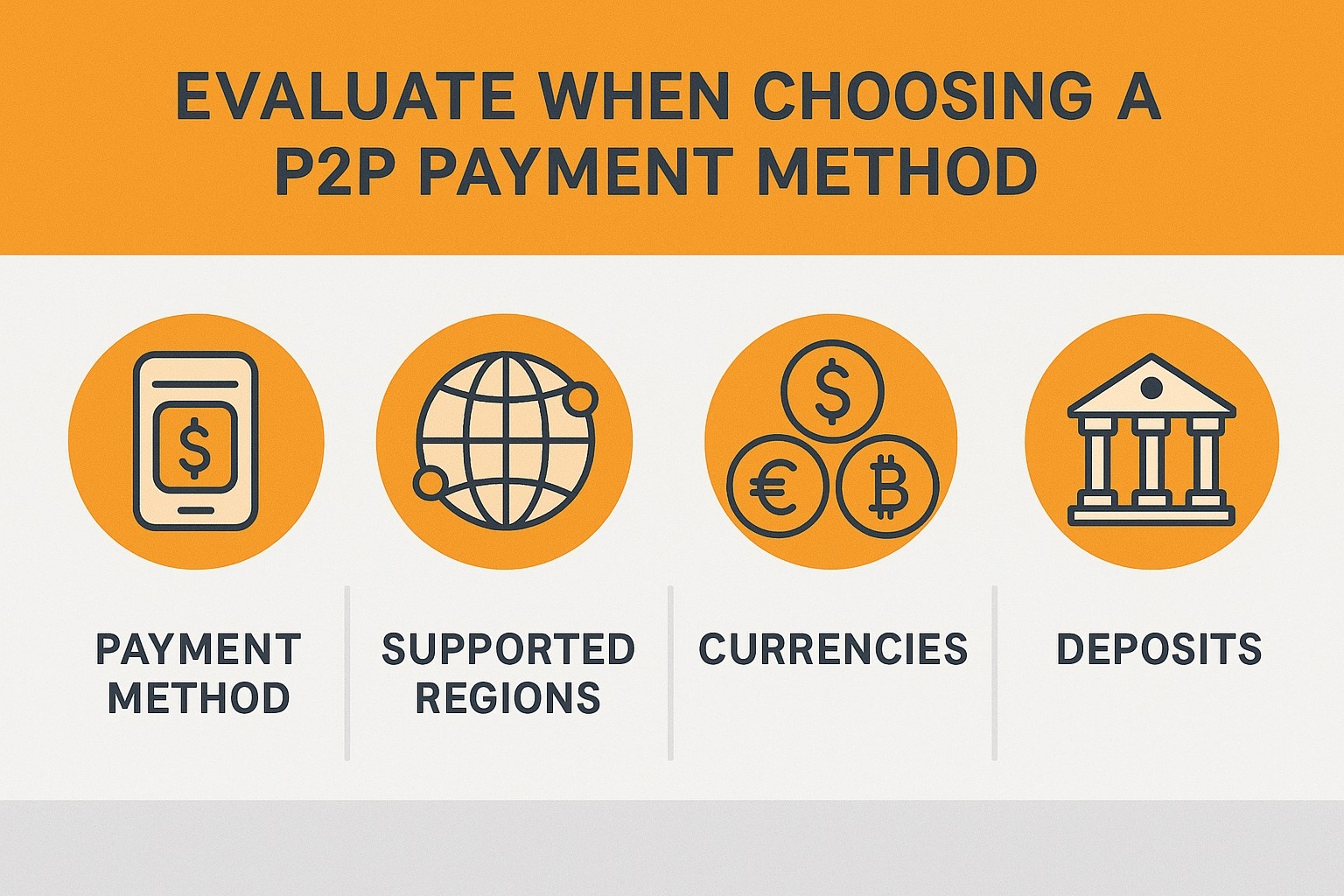
A solid P2P integration goes far beyond brand recognition. Here’s what to check before onboarding a new solution:
-Start with the payment method name — not just for branding clarity, but to understand how well it resonates with your audience and whether it’s known for reliability or speed.
-Review the supported regions to ensure coverage in your core markets, and equally important, identify any restricted regions to stay ahead of potential compliance pitfalls.
-Confirm which supported currencies are available. A good P2P method should handle not only major fiat (like USD and EUR), but also local currencies and, where applicable, crypto.
-Look for platforms that support deposits into player wallets and accounts, as this determines usability for onboarding.
-Ensure the minimum/maximum deposit range suits your audience — ideally covering micro-deposits from casual players and higher thresholds for VIPs (e.g. $1–$20,000).
-Scrutinise the deposit commission structure. If there are fees, players need to know upfront — and you’ll want to understand the cost to your margins.
-On the payout side, confirm the method also supports withdrawals, since a one-way system limits user confidence.
-Check whether the minimum/maximum withdrawal limits are wide enough to accommodate various player tiers, again targeting a range like $1–$20,000.
-Understand the withdrawal commission — who pays it, how much, and whether it could deter users from cashing out.
-Investigate any transfer limits (daily, weekly, monthly), particularly if you operate in high-volume or VIP-heavy environments. These limits impact both user experience and fraud monitoring.
-Finally, evaluate security features. Strong encryption, multi-factor authentication, transaction alerts, and KYC/AML support are non-negotiable for compliance and trust.
Use cases for operators and players
Operators benefit from P2P systems by accessing a broader customer base, especially in emerging markets. For players, these systems often mean faster transactions, lower fees, and improved access. Particularly for unbanked or underbanked users, P2P methods serve as a financial gateway.
Regulatory considerations
Because P2P systems are decentralised or semi-regulated, due diligence becomes even more critical. Operators should work with providers who maintain transparency in security features, adhere to local laws, and offer robust compliance support.
In light of growing regulatory and market demands, P2P payment methods are poised to become a cornerstone of financial strategy. By understanding the core metrics — from supported regions and transfer limits to withdrawal commission and security features — operators can make informed decisions that drive growth and player satisfaction.
Stay ahead of the curve. Choose the right P2P partner, and unlock frictionless financial flows for your platform.
Related Articles

March 17, 2026Los principales eventos de afiliados del...
March 17, 2026Крупнейшие мероприятия в сфере игорного...