 Nothing found for the request


 Gaming software
 Platforms
 Sports betting
 Equipment
 Services
 Traffic
 Payment solutions
 Other products
 Additional Software
How to Start an Online Casino in Mexico: What You Need to Know
Sologe December 9, 2025
Share:


A clear, practical guide on launching an online casino in Mexico, covering licensing, payments, partners, and local rules.
Starting an online casino in Mexico sounds exciting, but the real process is a bit more layered than people expect. The market is huge, players love mobile gaming, and interest in sports and casino content keeps growing every year. At the same time, the regulations are pretty strict, so you need a solid partner, the right paperwork, and a clear plan before you even think about going live.
In this guide, we’ll walk through the basics in a straightforward, real-world way. No hype, no corporate fluff. Just the things operators actually need to understand if they want to enter the Mexican market legally and build a casino that players trust. Let’s get into it.
Why Mexico Has Become a Serious Market for Online Casinos
Mexico is one of those markets that surprises people in a good way. Players are already comfortable with betting, whether it’s football, baseball, or quick games like scratch cards and lotteries. And because most of the country is glued to their phones, playing online is just a natural extension of habits people already have.
There’s also this noticeable American influence that shows up everywhere, from the way brands look to how people expect sites to function. The combination of US-style sports culture and Mexican gaming traditions creates a pretty unique market.
A few reasons the region feels promising:
- Huge population with strong mobile habits
- High internet access
- A culture where betting isn’t frowned upon
- Big appetite for digital payments
- A regulatory environment that’s strict but not chaotic
Of course, the excitement fades fast if you assume the rules are loose. They’re not. To operate legally, you need to play by Mexico’s system, and that system has exactly one legal entry point.
The Legal Reality: You Can’t Operate on Your Own
Here’s the part people often miss on day one: Mexico does not hand out new online casino licences. That door is closed and has been for a long time. The only legal way in is through a local partner who already holds a land-based casino permit from SEGOB, the main authority for gambling.
There’s no shortcut here. You can’t apply independently as a foreign operator, you can’t buy your way around it, and you can’t “temporarily operate” while waiting for paperwork. You either partner with a licence holder or you don’t operate at all.
Once you have that partnership, then you can start the official process to extend their licence to online operations. And that’s where the real paperwork begins.
How the Licensing Process Actually Works
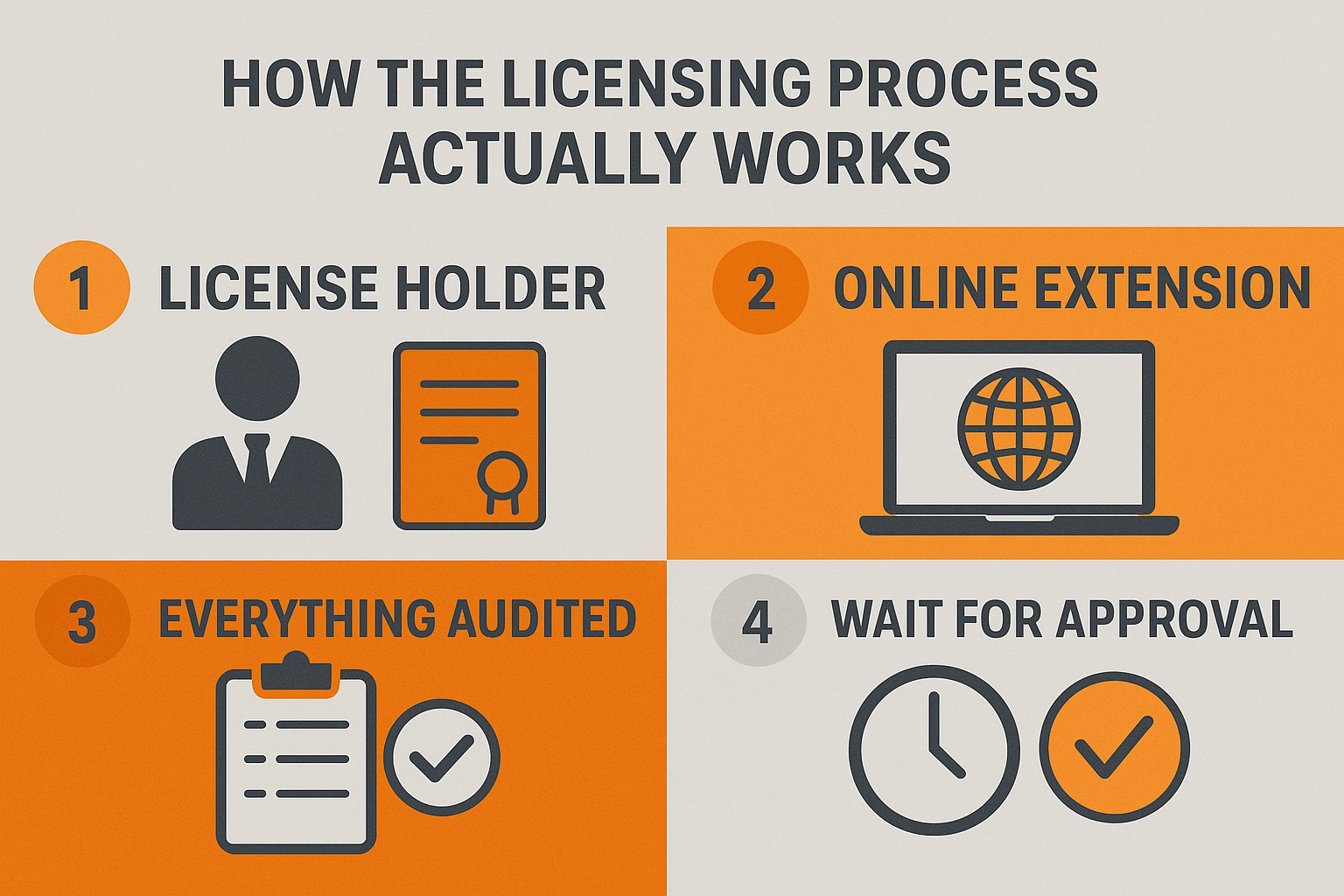
Getting approved takes patience. Most operators end up dealing with a 12 to 18 month timeline from start to finish. It’s doable, but you won’t speed-run this process unless everything goes perfectly.
1. Find a Local Licence Holder
This is non-negotiable. Your partner’s permit is what makes your application possible.
2. Submit the Online Extension
Your partner sends the application to SEGOB. You’ll need to hand over a mountain of documentation, including your technical setup, KYC workflows, AML procedures, game certifications, sportsbook engine details, and anything else that proves your system is solid.
3. Get Everything Audited
Labs like GLI or BMM will comb through your platform to make sure:
- Your games are fair
- Your RNG is legit
- Your security setup is strong
- Payments work properly
- Your sportsbook engine passes their standards
- Your data is stored the right way
It’s a deep audit, not a quick skim.
4. Wait for Approval
SEGOB usually takes a few months to finalise their decision, and they’ll almost always come back with questions or requests for clarification. That’s normal.
What Changed After the 2023 Reforms
Mexico shook up its gambling rules in 2023, and the changes were a lot more serious than many operators expected. One of the biggest shifts was the ban on new permits for slot machines, meaning existing casinos can operate them only until their current licences expire. On top of that, licences stopped renewing automatically, so once a permit runs out, the operator has to shut down unless SEGOB decides to issue a brand new one. In other words, the old habit of quietly rolling over permits is gone.
With these updates, compliance stopped being a box-ticking exercise and became something you have to take seriously from day one. Regulators now expect detailed records, transparent reporting, and responsible gaming features that actually work, not just look good on paper. Everything from your KYC flow to how you store data has to be polished and documented, because SEGOB will ask for proof.
This is also why choosing a platform provider who understands the Mexican rulebook makes such a difference. If your tech partner already has certified modules, approved games, and a clean history with audits, you avoid a lot of delays and back-and-forth with regulators. It doesn’t eliminate the work entirely, but it does make the process smoother and keeps you from learning every rule the hard way.
What Mexican Players Actually Want
Mexico isn’t a market where you throw together a generic casino template and hope people won’t notice. Players can tell immediately when a brand actually understands their culture, their preferences, and even the small details that matter in day-to-day play. If your site feels like something copied from another region, you’ll lose trust fast. The operators who do well here are the ones who build with intention and make the experience feel familiar, not foreign.
What They Enjoy
- Betting on Liga MX
- NFL and baseball
- Greyhound racing or jai alai in certain regions
- Local-themed slot games
- Live dealer tables
- Instant-win games and lottery-style options
What They Expect
- A full Spanish interface
- Local payment systems that actually work for them
- Quick, painless sign-up and verification
- A clean, responsive mobile version
- Straightforward withdrawal rules
- A serious, trustworthy brand image
Mexico also has clear regional differences, and that makes a big impact on player behavior. What resonates in the north near the US border might not hit the same way in the south or in urban centers like Mexico City. Because of this, a one-size-fits-all casino usually ends up being a one-size-fits-nobody casino. The more you adapt to different segments of the country, the better your chances of standing out.
Setting Up the Technical Side the Right Way
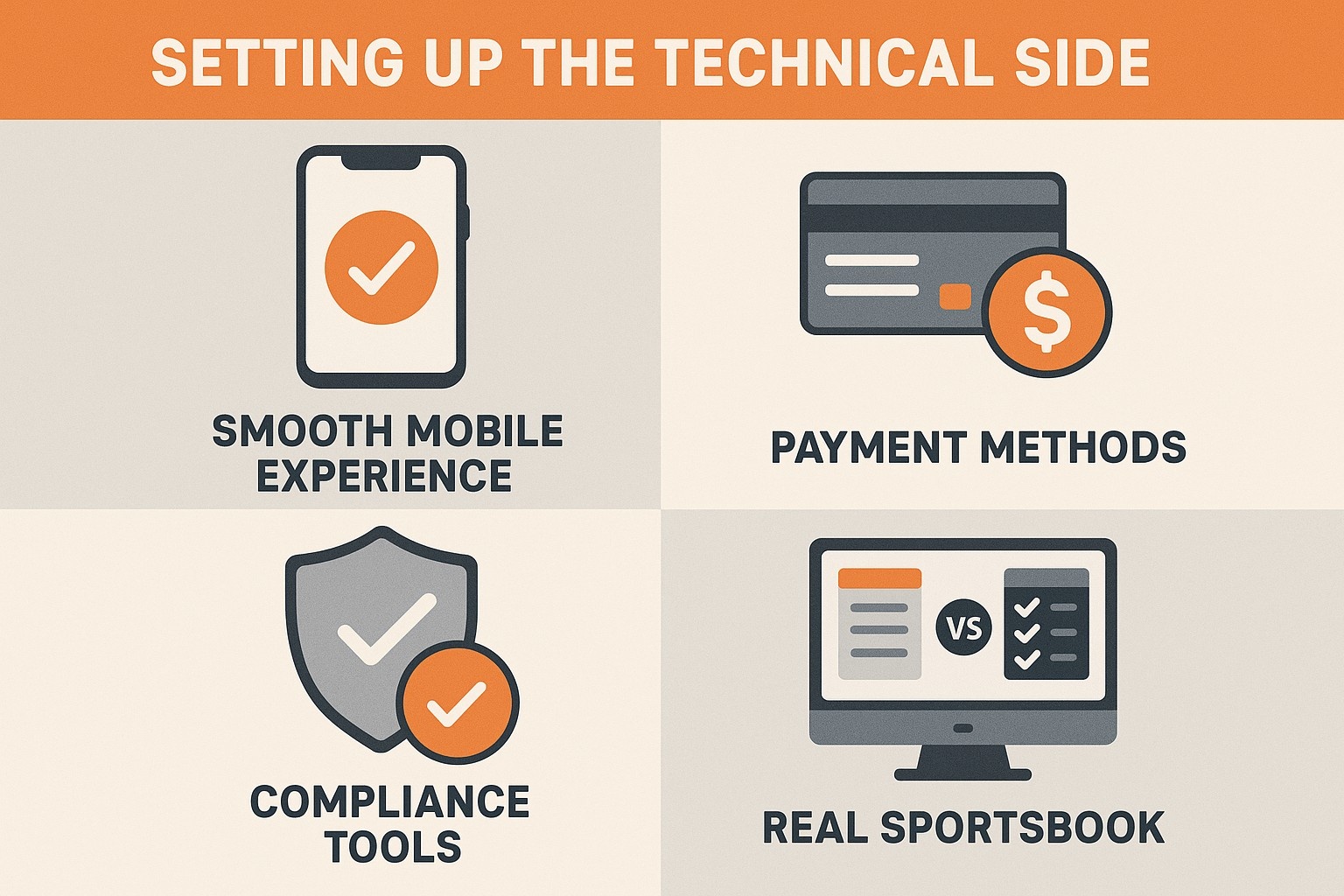
Your platform is basically your reputation. If it’s slow, messy, or not adapted to local systems, your launch becomes painful very fast.
Here are the things that matter most:
1. A Smooth Mobile Experience
A good mobile experience is absolutely essential in Mexico. Most players won’t even bother trying your desktop version because their phone is the place where they play, pay, and check results. If the site feels slow, cramped, or awkward on a smaller screen, they’ll leave within seconds and probably never return. Mobile isn’t an add-on here. It’s the core of the entire operation.
2. Payment Methods Mexicans Actually Use
Payments can make or break your casino. Players expect familiar global options, but the local payment systems are where everything really clicks. SPEI, CoDi, DiMo, and OXXO Pay are part of everyday life, and people trust them. Cards and popular e-wallets like Neteller, Skrill, and Mercado Pago also matter, and crypto is growing steadily. One thing to prepare for: many cross-border cards get declined, so relying too much on them creates frustration you can easily avoid with better local integration.
3. Compliance Tools
Compliance is not something you patch together later. You need a clean, well-structured setup for KYC, AML, and transaction monitoring, along with certified games, a fair RNG, and secure data storage. SEGOB will examine all of this closely. If your documentation or tools look incomplete, you’ll spend months going back and forth with auditors.
4. A Real Sportsbook
Sports betting is huge in Mexico, often accounting for half of all wagers. That means your sportsbook has to feel quick, reliable, and built for real fans. It should handle live odds smoothly, cover Mexican and international leagues, offer sensible betting limits, and update in real time. Players can tell instantly when a sportsbook is underpowered or poorly maintained, and they won’t stick around if they sense it.
Taxes and Financial Realities You Should Expect
At first glance, Mexico’s tax setup looks pretty straightforward, but once you dig into the details, you start to feel the weight of it. You’ve got the 30 percent corporate income tax on whatever you actually earn, which is normal enough. But then there’s the IEPS tax, which is 30 percent on revenue (GGR), typically calculated as bets minus winnings.
There are a few regional deductions that can take a tiny bit of pressure off the IEPS, but honestly, they don’t move the needle very much. And when you stack all these taxes on top of your regular expenses like software fees, affiliates, bonuses, support, and compliance work, it becomes pretty clear why operators need a solid financial plan before launching. Mexico can absolutely be profitable, but only if you understand the tax reality upfront instead of trying to adjust for it later.
Marketing Rules: The Dos and Don’ts
Mexico is pretty strict when it comes to gambling ads, and they enforce those rules much more seriously than many new operators expect. If you’re licensed, you can absolutely promote your brand, but the advertising has to follow a clear legal structure. Think of it as a checklist that keeps you out of trouble and shows regulators you’re taking responsible gaming seriously.
You Must Include
- Your permit number: This is non-negotiable. Every ad has to show the number clearly so players and regulators instantly know you’re operating legally.
- The 18+ warning: Gambling content must always remind viewers that it’s for adults only. Even if it feels obvious, leaving this out is considered a violation.
- A responsible gaming line: Something simple like “Juega con responsabilidad.” It shows you acknowledge the risks and support safer play.
You Cannot
- Target minors: Anything that feels youthful, cartoonish, or appeals to underage audiences is off-limits. This includes influencers with young audiences.
- Promise guaranteed wins: No “easy money” claims, no “everyone wins here” vibes, nothing misleading about odds or payouts. Mexico is very clear about this.
- Skip the legal disclosures: If your ad doesn’t include the required warnings and permit number, it’s considered illegal, even if everything else is perfect.
- Promote an unlicensed casino: This applies to affiliates, influencers, and media platforms too. Advertising for an operator without a valid permit can result in serious penalties.
Influencers, affiliates, and social media campaigns are allowed, but they must be aimed at adults and follow the rules.
What Actually Works
When it comes to getting traction in Mexico, a few marketing approaches tend to outperform the rest. Local influencers are often surprisingly effective, especially when they already have an adult audience that trusts their recommendations. Age-gated social ads also play a big role, since platforms like Facebook, Instagram, and TikTok allow you to limit exposure to adults and stay within the rules. Sponsored articles and features in local media help build credibility, and affiliate sites remain one of the strongest channels for long-term player acquisition.
Partnerships with sports teams can also make a huge impact, mostly because sports culture is such a big part of everyday life. Even small regional clubs can drive real engagement if the audience feels connected to them. And overall, campaigns that feel familiar to Mexican players work far better than generic global ads. The country responds really well to social content in general, especially compared to parts of Europe where gambling ads often get heavily restricted or buried by algorithms.
Picking the Right Platform Provider
Choosing the right platform provider can save you a lot of stress down the line. The best providers already understand how Mexican regulations work and come with most of the required pieces already built in, like proper certifications, trusted payment connections, and compliance-ready workflows. Ideally, you want a partner who offers Spanish-language support, has a smooth mobile interface, and handles MXN without any complications. Local payment methods should be part of their system from day one, not something they promise to add later.
It also helps if their RNG is certified, their game library is broad enough to fit local tastes, and their sportsbook can actually keep up with live odds and busy match days. Reliability matters too, so look for a provider with strong uptime and fast loading speeds. And because regulators take compliance seriously, your provider should have KYC and risk tools already built into the platform. If they’ve worked in Mexico before and know how to deal with SEGOB’s expectations, that’s even better.
A Realistic Timeline From Idea to Launch
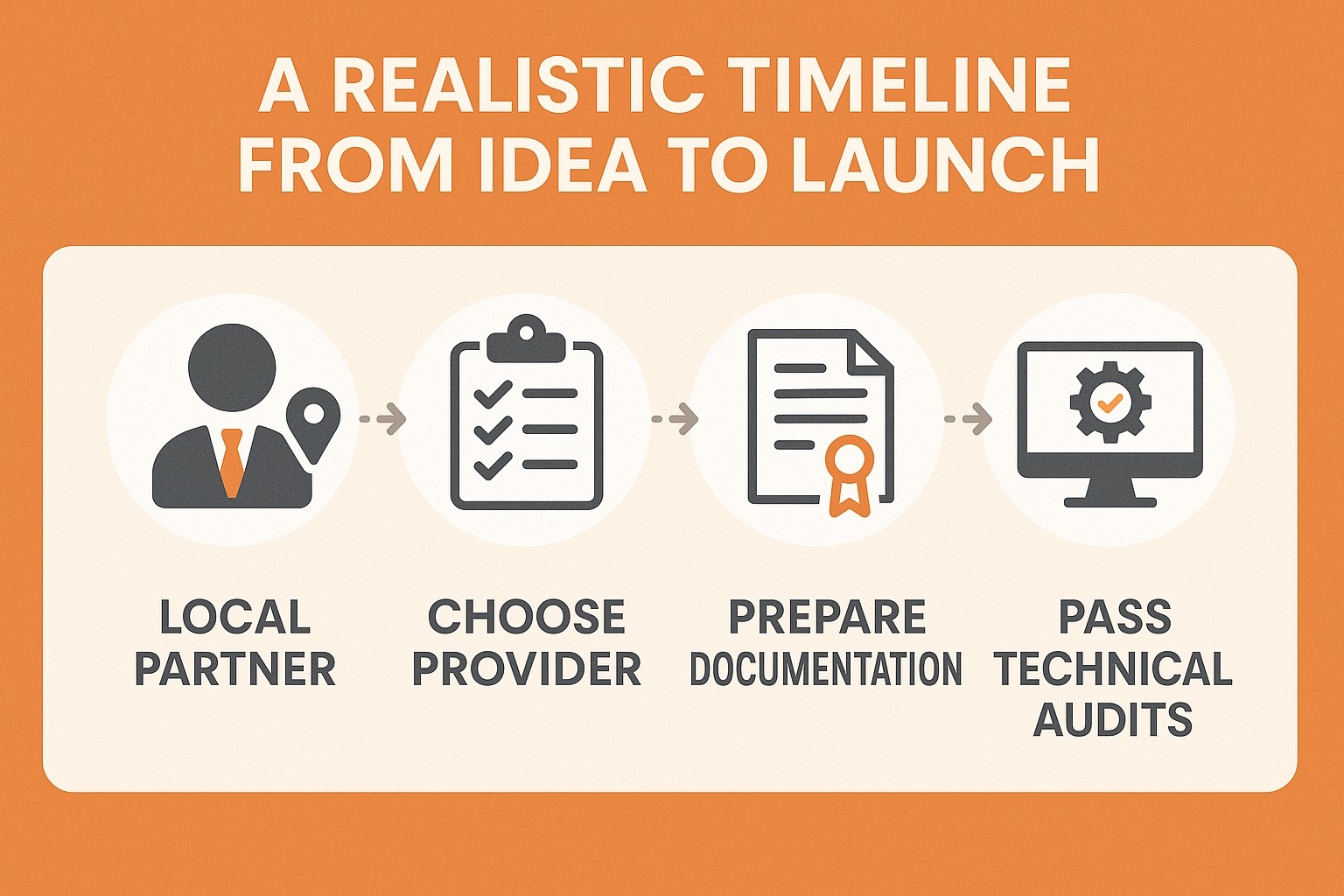
1. Find Your Local Partner
Everything starts here. You need a Mexican licence holder with a valid land-based permit, and finding the right one is usually the longest part of the process. Without this partnership, nothing else can move forward.
2. Choose Your Provider
Once you have your partner, you pick the platform provider that will power your casino. Most operators choose a company that already understands Mexican compliance rules to avoid surprises later.
3. Prepare the Documentation
This stage is mostly paperwork, but there’s a lot of it. You’ll gather technical documents, security policies, KYC and AML procedures, and anything else that proves your platform is built responsibly.
4. Pass the Technical Audits
Labs like GLI or BMM step in here. They examine your software, your RNG, your sportsbook engine, your security setup, and your data storage. It’s thorough, and you’ll probably make a few adjustments along the way.
5. Submit Your Online Extension
Your local partner files the application with SEGOB, using all the documentation and certifications you’ve prepared. After that, your job is mostly to stay ready for follow-up questions.
6. Wait for SEGOB’s Response
This part varies. Sometimes you hear back quickly, other times SEGOB asks for clarifications or extra documents. Either way, you’re in their timeline now.
7. Finalise Payments and Infrastructure
While waiting, most teams finish setting up payment systems, integrations, servers, and content delivery so the casino is technically ready to go.
8. Test Your Platform
Before going live, you run internal tests and usually a controlled beta environment to make sure everything works under real conditions.
9. Soft Launch
Many operators open the platform quietly at first, just to catch any last issues and confirm player flows work as expected.
10. Full Launch
Once everything is stable, you officially go live and begin operating. This is the point where your marketing strategy really kicks in.
Most operators spend somewhere between 12 and 18 months moving through these steps, depending on how organized they are and how quickly audits and approvals go.
Final Thoughts
Mexico is a big opportunity, but it rewards patience, not speed. If you take the time to understand the rules, pick the right partner, and offer something that actually feels Mexican rather than generic, the market opens up in a meaningful way.
Do it properly, and you can build something long-lasting. Treat it like a quick shortcut, and you’ll hit walls almost immediately.
FAQs
Is it legal to start an online casino in Mexico?
Yes, but only under specific conditions. You cannot operate independently or apply for your own online licence. The only legal way is to partner with a Mexican company that already holds a valid land-based casino permit issued by SEGOB. That partner can then request an online extension for your project.
Can a foreign company get a Mexican iGaming licence on its own?
No. Mexico does not issue standalone online casino licences to new operators, including foreign ones. You must collaborate with an existing licence holder or acquire a stake in one.
How long does it take to launch an online casino in Mexico?
Most operators need between 12 and 18 months. The timeline covers securing a local partner, passing technical audits, submitting the online extension, and waiting for SEGOB’s approval. Delays usually happen when documentation is incomplete or the platform isn’t compliant.
What documents do I need for the licensing process?
You’ll need technical documentation for your platform, RNG certifications, sportsbook engine details, KYC and AML procedures, security policies, data storage plans, and proof that your games are certified. A large portion of the package comes from your platform provider.
Do I need to certify my software and games?
Yes. Labs like GLI or BMM must audit and certify your systems before SEGOB will review your application. This includes your RNG, security infrastructure, payment logic, and sportsbook modules.
Related Articles

March 17, 2026Los principales eventos de afiliados del...
March 17, 2026Крупнейшие мероприятия в сфере игорного...