 Nothing found for the request


 Gaming software
 Platforms
 Sports betting
 Equipment
 Services
 Traffic
 Payment solutions
 Other products
 Additional Software
How to Start an Online Casino in South Africa: A Practical Guide
Sologe December 9, 2025
Share:


A clear, practical guide on launching a compliant online casino in South Africa, covering licensing, payments, software, and local player habits.
Starting an online casino in South Africa comes with a mix of excitement and real-world challenges. The market is growing fast, players are mostly mobile, and the demand for casino-style games keeps climbing despite the country’s strict regulations. At the same time, the rules aren’t always straightforward, and you need a solid plan before you invest a single rand.
This guide breaks everything down in a simple, grounded way. You’ll see how the licensing system actually works, which legal paths operators use today, and what South African players expect from a platform. No hype, no fluffy promises, just a realistic look at what it takes to launch a casino that can survive in a competitive and heavily regulated market.
Why South Africa Is an Attractive but Complex Market
South Africa has one of the most active gambling markets on the continent. Mobile gaming keeps growing, people engage heavily during evenings and load-shedding hours, and sports betting is already a cultural norm. The online casino segment is smaller than the sports side, but it’s shaping up to be one of the country’s fastest-growing online verticals.
At the same time, this isn’t a fully legalised casino environment. You can’t just buy a licence, fill your site with slots, and go live the next day. You have to work within a framework where national laws say one thing, provinces interpret those laws in their own way, and the entire system is slowly shifting as regulators push for modernisation.
This mix of opportunity and complexity is exactly why many operators want in but hesitate. The good news is that entering the market is very doable when you follow the right steps. The bad news is that improvising your way through it is one of the fastest ways to fail.
How Online Gambling Legally Works in South Africa
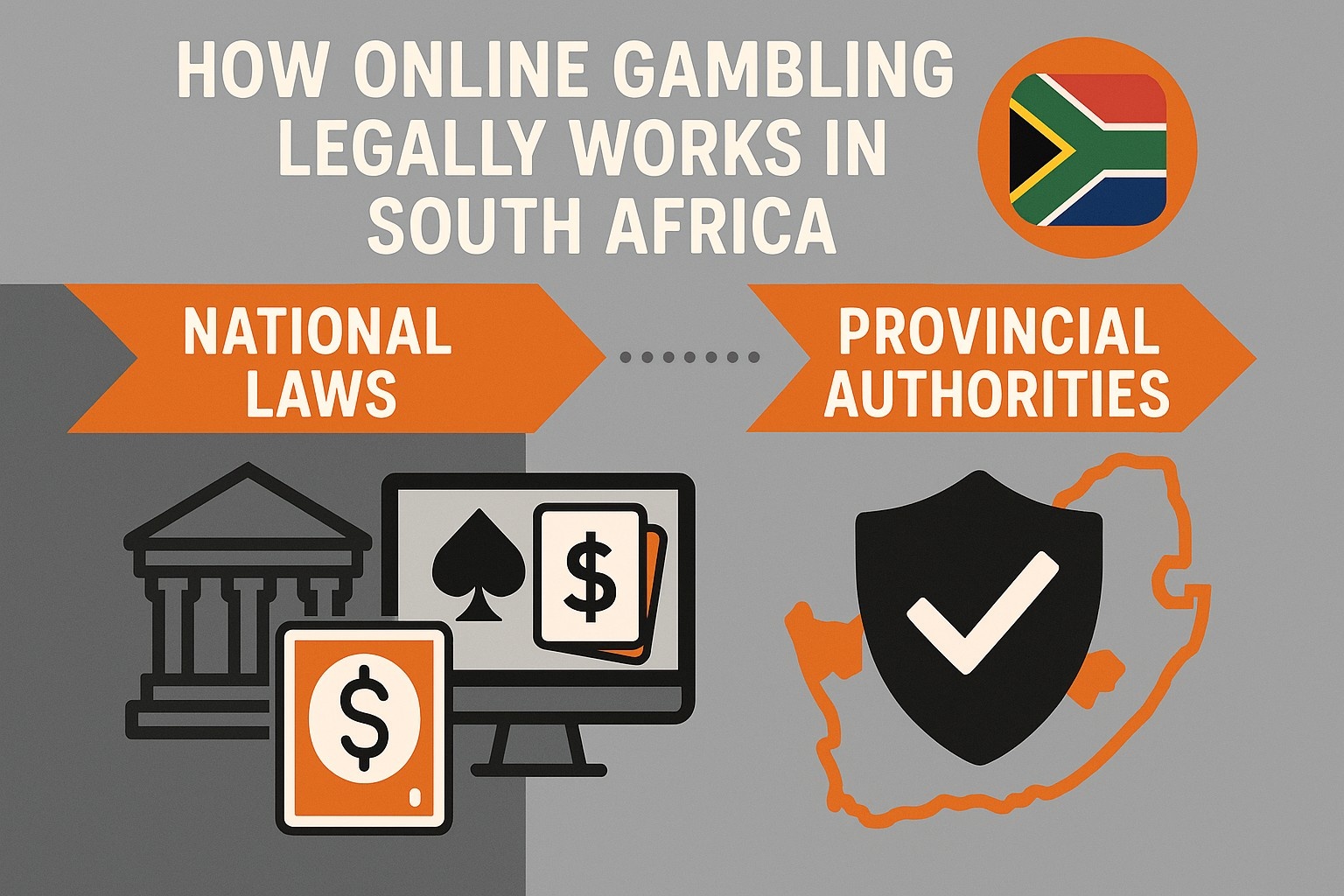
Here’s where a lot of newcomers get confused, so let’s break it down in simple terms.
South Africa has a dual regulatory system:
- National laws set the broad rules for gambling.
- Provincial authorities handle the licences and enforcement.
The National Gambling Act still technically prohibits unlicensed interactive gambling, which includes online casino games. However, provinces can license specific activities, and they don’t all treat casino-style products the same way.
A few things to know:
- Online sports betting is fully legal, as long as you have a provincial licence.
- Traditional online casino games and poker are not explicitly legal on a national level.
- Some provinces, especially the Western Cape, interpret fixed odds betting in a way that allows casino-style content.
- Operators must stay strictly within the permissions listed on their provincial licence.
This means you can operate legally, but you must choose your province carefully and structure your platform to match what your licence allows. The Western Cape Gambling and Racing Board is currently considered the most operator-friendly for online casino-style games, which is why many brands start there.
It’s important to add that regulatory discussions are ongoing. National reforms have been proposed several times, and full legalisation of online casino gaming keeps coming back to the table. If things do change, early-licensed operators will have a head start when the new system arrives.
Getting Your Licence: What the Provincial Process Looks Like
Getting a gambling licence in South Africa isn’t something you rush. The process is detailed and sometimes slow, but it’s straightforward once you understand the steps.
Most provinces follow a structure like this:
1. Submitting Your Application
The first step is putting together a proper application package. This usually includes your business plan, company registration documents, financial statements, ownership details, and a clear explanation of your platform and its technical partners. Regulators also want to see proof that your software provider holds the right certifications, since this shows your system can be trusted in a regulated environment. The goal here is to prove that your operation is stable, transparent, and not connected to questionable individuals or businesses. If your B2B partners already operate in regulated markets, that usually makes this step much smoother.
2. Background and Financial Checks
Once your application is in, the regulators start digging into the people behind the company. They look closely at directors, shareholders, your source of funds, your past reputation, and any red flags that might have appeared in previous business dealings. This stage is very strict, and if something doesn’t line up, the board will either ask for clarification or reject the application outright. They need to be confident that everyone involved is clean and trustworthy.
3. Technical Testing
After that, your platform goes through technical assessments. These tests are designed to confirm that your games are fair, your RNG has been validated by a recognised lab like GLI or BMM, and your systems follow proper KYC and AML procedures. Regulators also check data protection standards, player risk monitoring, and your responsible gambling tools. Provinces take these requirements seriously because they want to protect players and make sure your platform can’t be used for things like fraud or money laundering.
4. Licensing Decision
If everything checks out, the province moves forward with a licensing decision. Depending on where you apply, your licence may cover online sports betting only, fixed odds betting, or in some cases casino-style games under specific conditions. The entire process takes time, often several months or longer, so it’s something you need to plan for well ahead of launch.
Costs You Should Expect Before Launching
It’s easy to budget for software or marketing and forget that compliance is a major part of your costs in South Africa. Here’s a realistic look at what operators usually spend.
Licensing Fees
These vary heavily by province. Based on public data:
- Western Cape: Application fee approx. €870 (ZAR 16,500); Annual fee approx. €580 (ZAR 11,000).
- Gauteng: Application fee approx. €770 (ZAR 14,600). Note: New licenses in Gauteng are rare; many operators buy existing licensed companies, which can cost significantly more (€50,000+).
- North West: Application and Annual fees are approx. €600 (ZAR 11,400).
Important: These are purely administrative fees. You should budget an additional €5,000–€10,000 for probity investigations and legal consulting.
Licensing Fees Contrary to common belief, the official government fees for a Bookmaker Licence (used for online operations) are relatively low across most provinces, typically ranging from €500 to €1,000 (ZAR 10,000 – ZAR 20,000) for application and annual renewals.
However, you must budget significantly more for probity investigations (background checks). Regulators often require a deposit for these investigations, which can range from €2,500 to €5,000+ depending on the complexity of your company structure.
Additional Operational Costs
Beyond the licence fees, there are several ongoing expenses that operators sometimes underestimate. You’ll need to budget for compliance and monitoring fees, software certification, regular audits, and the integration of technical monitoring systems required by provincial regulators. Staff involved in betting operations usually need individual licences, and you’ll also be responsible for GGR taxes, which typically range from 5 to 15 percent depending on the province.
Legal consulting is another recurring cost, since you’ll need guidance to stay compliant with advertising rules, reporting obligations, and any regulatory changes. On top of that, there are security and data protection expenses, financial audits that must be done annually, and in some provinces, bank guarantees that must be held to cover player balances and other liabilities. None of these are one-time payments, so it’s important to plan for them as part of your long-term operating budget.
Choosing the Right Software Provider for the South African Market
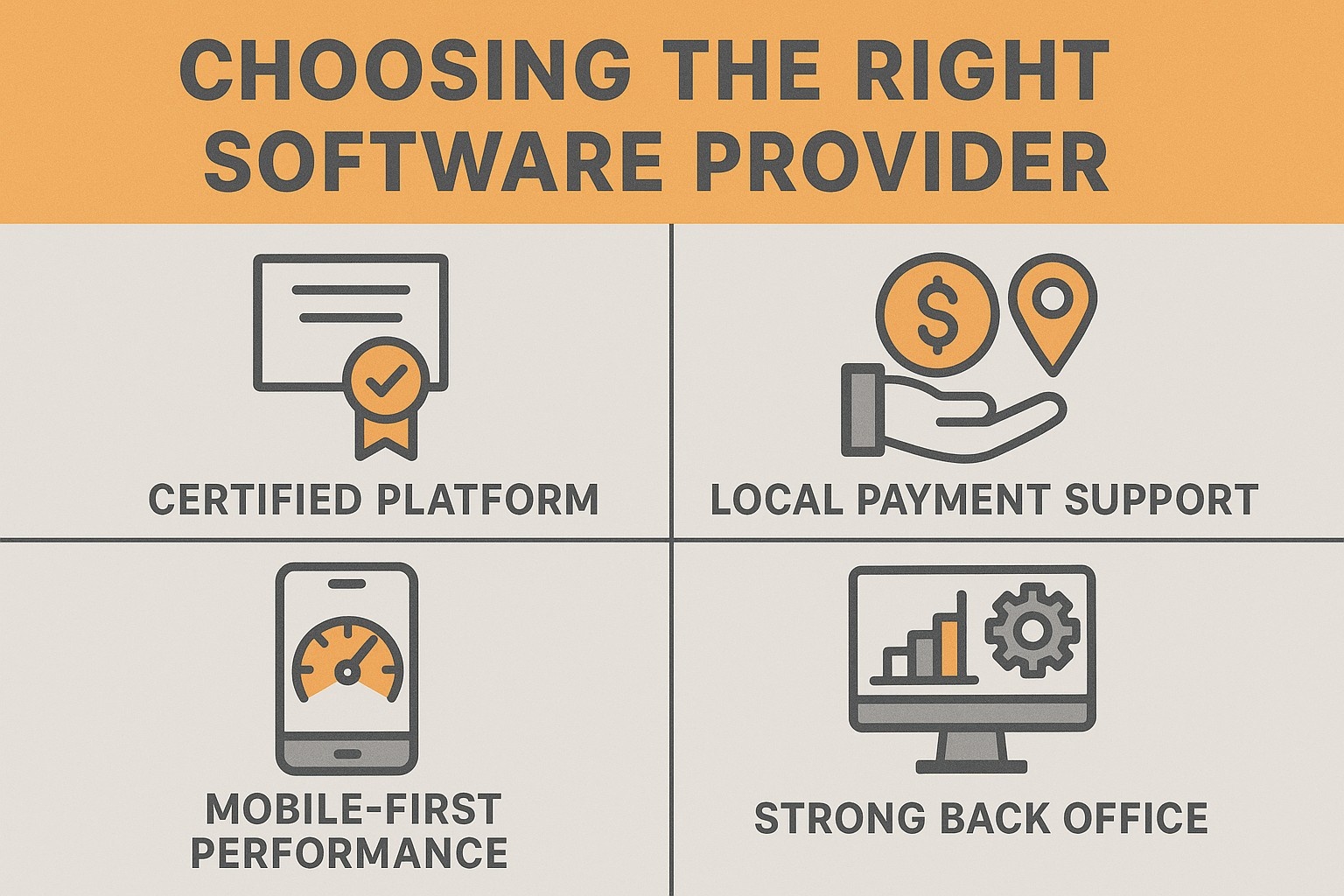
Your software partner is one of the most important decisions you’ll make. South African regulators expect platforms to meet strict standards, and local players have very specific expectations around speed, payments, and mobile performance.
A good provider should offer:
Certified Platform Software
Your system must pass technical and fairness checks. Providers that already have GLI or BMM certifications have a clear advantage.
Local Payment Support
South African players approach payments differently from European casino players, so your platform has to match the way they prefer to deposit and withdraw. Instant EFT is extremely common, and many players rely on bank wallets, vouchers, and local digital payment solutions. Cards are still used, but not nearly at the level you might expect if you’re coming from the EU market. If you don’t support the payment methods people trust and actually use, you’ll lose a significant portion of potential players right away.
Mobile-First Performance
More than 90 percent of players access casino and betting platforms through their phones. That means your site has to load quickly, run smoothly on mobile data, and stay functional during load-shedding periods, which can disrupt connections. A platform that feels slow or clunky on mobile won’t keep players around for long.
A Strong Back Office
As the operator, you need complete control over how your platform functions behind the scenes. This includes managing bonuses, adjusting player risk rules, handling payment flows, configuring game settings, and accessing reliable reporting tools. When the back office is disorganized or limited, it becomes a serious problem later on, especially when you start growing and need to make fast, informed decisions.
Game Aggregation
Many software providers offer aggregation systems that let you plug into hundreds or even thousands of games through a single integration. It’s a convenient way to build a diverse game library without managing dozens of separate contracts. For new operators, this makes scaling much smoother and far less time-consuming.
Understanding What South African Players Actually Want
It’s tempting to think “casino players are the same everywhere,” but South Africa is different. People here have their own traditions, preferences, and expectations, and these shape the way online platforms succeed.
A few patterns stand out:
1. It’s a Mobile-First Market
Most players are on smartphones. Many don’t even bother with desktop versions anymore. Your UX has to load fast, work on smaller screens, and handle unstable internet conditions gracefully.
2. Players Prefer Local Payment Methods
EFT and vouchers are especially popular. They’re fast, accessible, and feel more trustworthy to local players. Crypto is growing too, but not in the same way as in West Africa.
3. Crash Games Are Huge
Crash games, instant wins, and number draws have gained massive traction. Sports betting is still number one, but casino-style content that mimics fast-paced games tends to perform exceptionally well.
4. Cultural Relevance Helps
Players engage more when promotions tie into local events, public holidays, or major sports moments. Bonuses in ZAR also feel more transparent and trustworthy.
5. Trust is Everything
There’s a long history of unlicensed operators not paying out, which means players are cautious. Showing proof of licensing, offering clear terms, and having responsive support go a long way.
Marketing an Online Casino in South Africa Without Breaking the Rules
This is where many operators stumble. South Africa has strict rules about gambling advertising. Traditional channels like Google Ads are available to licensed operators who obtain the necessary certification, though strict compliance is required.
But that doesn’t mean you can’t grow. You just need to rely on acquisition channels that are both compliant and effective.
Alternative Marketing Strategies That Work
- Affiliate marketing: Partner with reputable review sites and comparison platforms.
- Content marketing: Publish helpful guides, legal insights, or market data.
- PR and editorial placements: Contribute to local tech, finance, or business media.
- Influencer outreach: Work with trusted personalities in gaming or tech.
- Community partnerships: Sponsor local digital events or sports prediction communities.
The goal isn’t to blanket the internet with ads. It’s to position yourself as a safe, regulated platform that’s worth trusting.
Why B2B Licensing Matters More Than You Think
Choosing the right software provider can make or break your licensing process. If your partner isn’t certified or familiar to local regulators, everything becomes more complicated. Provincial boards often want to see clear proof that your provider meets international standards, such as GLI or BMM certification. They also look at whether the company has experience in other regulated markets, what its compliance track record looks like, and whether it has a solid reputation in the industry.
When a provider lacks these credentials, regulators tend to slow down applications or question whether the platform can be trusted. In some cases, it can even lead to a rejection. This is why doing proper due diligence on your B2B partners isn’t just a formality. It’s one of the most important steps for keeping your licensing process smooth and predictable.
Building a Local Entity and Preparing for Launch
To operate legally in South Africa, you need to set up a locally registered company, since provincial boards won’t accept an application from a foreign entity. Depending on how you structure your business, you may also need a South African director, a dedicated compliance officer, and a physical presence that regulators can use for audits or verification checks. Once your local entity is in place and your licence is approved, the rest of the launch process feels similar to most other regulated markets, although South Africa tends to place a stronger emphasis on ongoing compliance and monitoring.
Structuring Your Casino for Growth
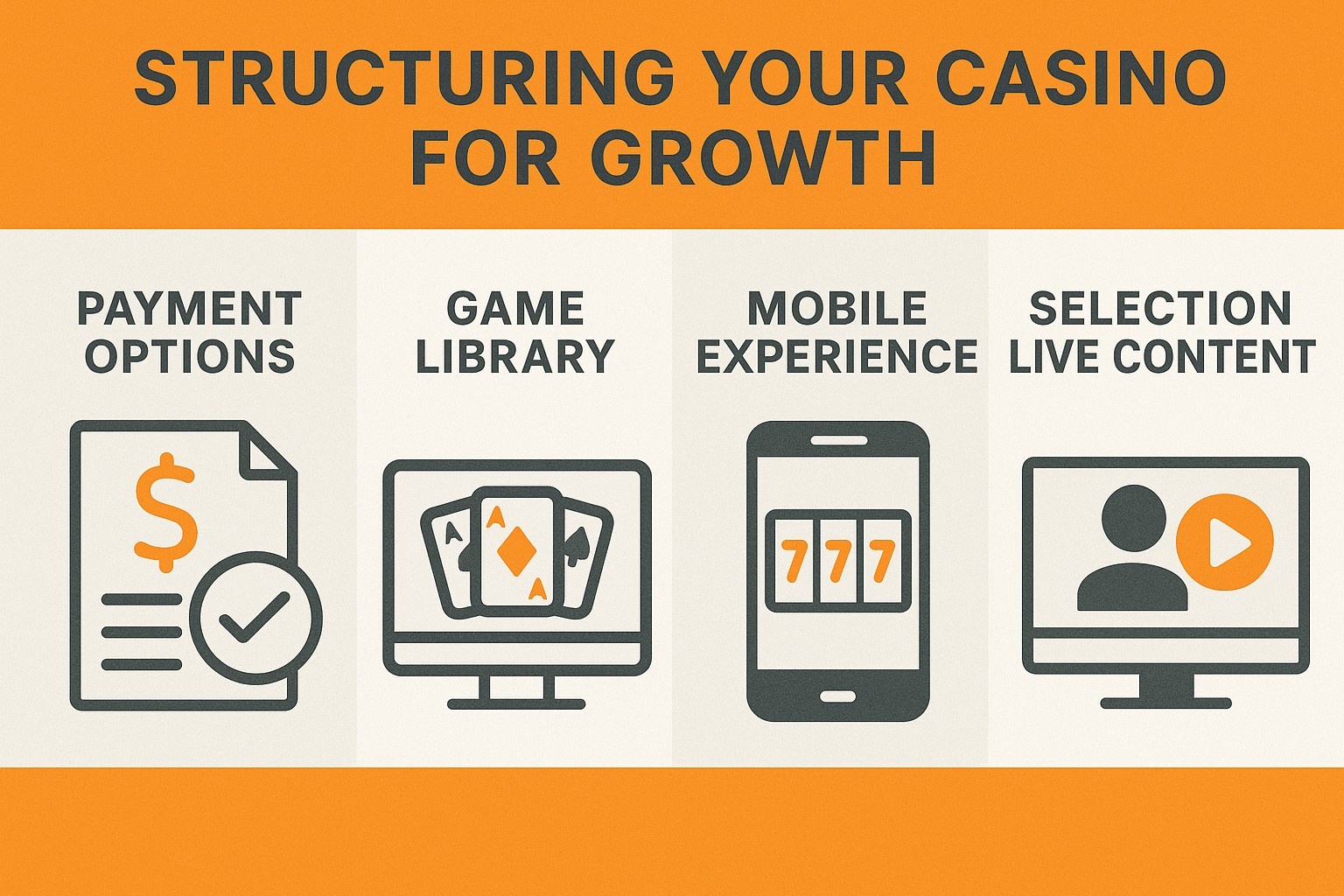
Getting your casino live is a big milestone, but it’s really just the start. South Africa is a competitive market, and the brands that last are the ones that think beyond the first few months. Once the site is running smoothly, most operators shift their focus to steady improvements rather than dramatic leaps. It’s not a race to expand as fast as possible. It’s more like building a house one room at a time so it doesn’t fall apart later.
Here are the main areas operators usually invest in once the platform is up and running:
- Adding more payment options as player habits shift or new services appear.
- Expanding the game library so the content stays fresh and varied.
- Improving the mobile experience, especially since most players are on their phones.
- Growing the selection of live content, which tends to keep users engaged for longer periods.
- Testing new retention tools to see what actually keeps South African players coming back.
- Entering additional provinces when it makes sense legally and operationally.
- Strengthening responsible gambling tools as part of meeting long-term compliance expectations.
Most of the successful brands in the country follow this slow and steady approach. Operators who try to scale aggressively usually end up buried under compliance issues or technical problems that could have been avoided with a measured pace.
Final Thoughts
Starting an online casino in South Africa isn’t a “spin it up and see what happens” project. You need to understand the legal structure, work with the right province, choose software that fits the market, and design your platform around how local players actually behave. When you do all that, you’re not just running a website. You’re building something sustainable in one of Africa’s most promising digital gambling markets.
If you’re deliberate in your planning and patient with the licensing process, South Africa can be a strong investment. And with the regulatory environment slowly heading toward broader legalisation, operators who establish trust now are likely to benefit the most when future reforms arrive.
FAQs
1. Is it actually legal to run an online casino in South Africa?
Yes, but it depends on how you structure it. Traditional online casino games aren’t fully legalised on a national level, but certain provinces allow casino-style content under fixed odds betting licences. Online sports betting is fully legal everywhere as long as you have a valid provincial licence. The key is choosing the right province and staying strictly within what your licence allows.
2. Which province is best for getting a licence?
Most operators look to the Western Cape because the local board is more experienced with online gambling and generally clearer about what they require. Other provinces also issue licences, but the Western Cape tends to be the most operator-friendly when it comes to online activity.
3. How long does the licensing process take?
It’s not fast. Even a clean application can take several months to process. If regulators need extra documents or have questions, it can stretch longer. It’s better to plan for a long timeline and avoid rushing, because mistakes slow things down even more.
4. How much money do I need to start?
There’s no single number, but you should be ready to invest in licensing fees, software, compliance, technical testing, payment integrations, security, and ongoing audits. Depending on the province and the scale of your project, the starting costs can range from tens of thousands to significantly more.
5. What kind of software do I need for South Africa?
You’ll need a certified platform that passes provincial technical testing. It should support local payment methods, run smoothly on mobile, and offer strong back office tools. Most operators work with established B2B providers that already hold GLI or BMM certifications to make licensing easier.
6. What payment options do South African players prefer?
Instant EFT, vouchers, bank wallets, and local digital payment methods are very popular. Cards are still used, but not as much as in European markets. If you skip the local payment methods, you’ll lose a lot of potential players.
Related Articles

March 17, 2026Los principales eventos de afiliados del...
March 17, 2026Крупнейшие мероприятия в сфере игорного...