 Nothing found for the request


 Gaming software
 Platforms
 Sports betting
 Equipment
 Services
 Traffic
 Payment solutions
 Other products
 Additional Software
How to Start an Online Casino Business in Mexico: Practical Steps and Local Realities
Sologe December 9, 2025
Share:


Mexico’s online gambling scene is lively, competitive, and shaped by a mix of old laws and modern digital habits. Operators who understand how the system works – from partnering with licensed land‑based casinos to offering payment methods local players actually use – have a much easier time entering this market. The path isn’t straightforward, but with the right preparation, it’s possible to build a casino that feels native, runs smoothly, and earns players’ trust.
Understanding the Legal Maze: How Online Gambling Really Works in Mexico
Online gambling in Mexico is legal – but only under a specific structure. You can’t just apply for a standalone online license. Instead, everything is tied to existing land-based casino permits, and new entrants have to partner with those already licensed. It’s a system built on older laws, patched with newer interpretations, and shaped by local partnerships rather than open licensing.
To launch legally, you’ll need to:
- Partner with a land-based operator already licensed in Mexico
- Apply for an online extension of that partner’s existing permit via SEGOB
- Provide full technical documentation: RNG certification, AML/KYC systems, sportsbook engine, platform security
- Pass a compliance audit from a certified lab (e.g. GLI, BMM)
- Be prepared for a long-term structure – licenses can last up to 25 years, plus 15 more if renewed
Offshore platforms still exist and operate in a gray area, often without local licenses. But if you want to run a visible, long-term, and fully compliant casino in Mexico, there’s really only one way in: partner up, prove your systems, and follow the official track.
Step-by-Step: How to Launch an Online Casino in Mexico
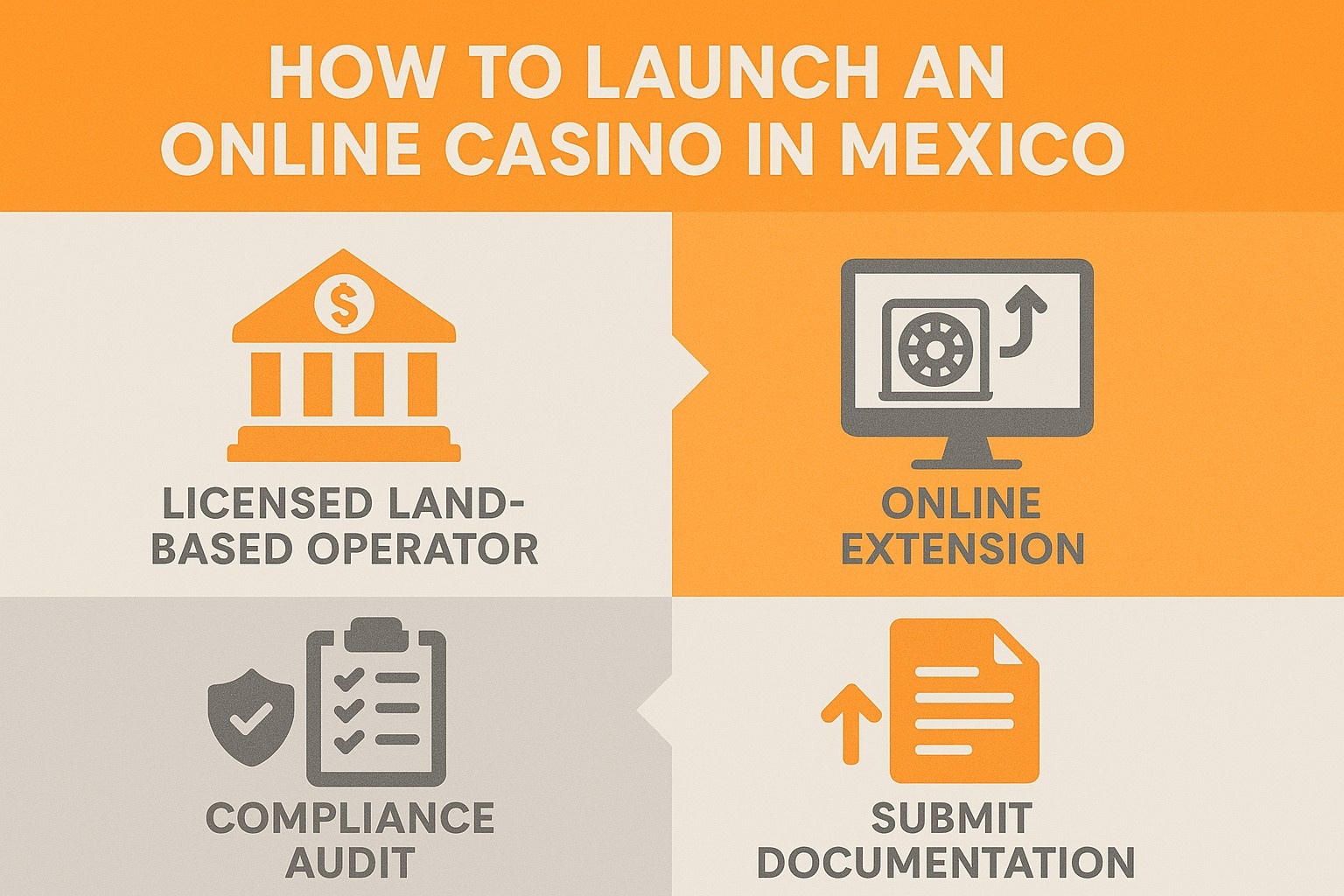
Getting an online casino off the ground in Mexico isn’t impossible – but it’s not something you can just spin up overnight. There’s a clear process, and most of it revolves around regulation, local partnerships, and showing that you’re serious about compliance. Here’s what the actual path looks like.
1. Partner With a Licensed Land-Based Operator
You can’t launch anything in Mexico without this first piece in place. Since the government doesn’t issue fresh standalone online licenses, the only entry point is through a partnership with a company that already holds a valid land-based gambling permit. That’s your legal anchor. Without it, your application won’t even be reviewed.
2. Apply for an Online Extension Through SEGOB
Once you’ve partnered with a licensed operator, the next move is submitting an extension request for online operations to SEGOB – the country’s Ministry of the Interior. It’s not a separate license, but rather an official add-on to an existing land-based permit. This extension lets you legally offer online casino games or sports betting under the same regulatory umbrella.
- You’ll need to align with the partner’s legal structure
- The application is submitted in their name (or jointly, if part-owned)
- Licensing fees usually equal 1-2% of gross gaming revenue, paid to SEGOB
3. Pass a Technical Compliance Audit
Before SEGOB gives the green light, your entire platform stack will be audited. This is where certified labs come in – usually GLI or BMM Testlabs – to review your random number generator, sportsbook engine (if applicable), security setup, and player protection systems like KYC/AML.
Make sure your tech partner is ready for this step – if your backend can’t meet basic requirements, the whole process stalls.
4. Register and Submit Documentation
This part isn’t exciting, but it’s mandatory. You’ll need to hand over a solid stack of documentation, including:
- Articles of incorporation
- Identity documents for key individuals (e.g., founders, directors)
- Financial statements and forecasts
- Full description of your platform’s technical setup
- Proof of fee payments and tax registration
Everything needs to line up with what SEGOB expects. If something’s missing or inconsistent, your timeline drags out fast.
5. Wait for Approval (and Be Ready to Fix Things)
Expect this to take anywhere from 6 to 18 months – sometimes longer depending on your partner’s history, your technical setup, or how clean your documents are.
And while you’re waiting, don’t assume silence means success. It’s common for SEGOB to request clarifications or updates. Be ready to respond quickly, and ideally with help from a local legal team that knows the ropes.
Launching in Mexico takes patience, local knowledge, and a setup that meets real regulatory standards. But if you’re structured right and you’ve got a licensed partner on board, the process is straightforward – just not fast.
What Games Work Best in Mexico?
If you’re trying to attract Mexican players, the game catalog can’t be generic. It has to feel familiar, a little local, and built for people who already know what they like. Here’s what tends to perform well – and why it matters.
- Slots with cultural flavor: Regular slots are fine, but the ones that actually get attention often carry local references – Día de Muertos themes, Aztec or Mayan motifs, or something that taps into Mexican folklore. Bright visuals and bold animations go a long way here.
- Football betting (obviously): Liga MX is huge, but so are international events like the World Cup or UEFA Champions League. If you’re offering a sportsbook, real-time odds and local leagues are non-negotiable. Think less “global sportsbook” and more “designed for fans who watch every Sunday.”
- Lottery and bingo: Raffle-based games have always been popular in Mexico, both online and offline. Bingo rooms with a strong social element tend to attract consistent engagement, especially if the design mimics traditional setups players already know.
- Poker and card games with a twist: Caribbean Stud, Texas Hold’em, and similar classics work well – especially if there’s a live dealer involved. But static digital tables often fall flat unless there’s a tournament or progression feature to keep people coming back.
- Live dealer experiences: These are catching on across Latin America, and Mexico’s no different. Games like blackjack, roulette, and baccarat with live hosts (especially Spanish-speaking ones) help boost session times and retention.
Tailoring your content isn’t about guessing – it’s about looking at how people already play and building from there. The more your games speak the local language – visually, culturally, and emotionally – the better your results will be.
Choosing the Right Casino Platform for the Mexican Market
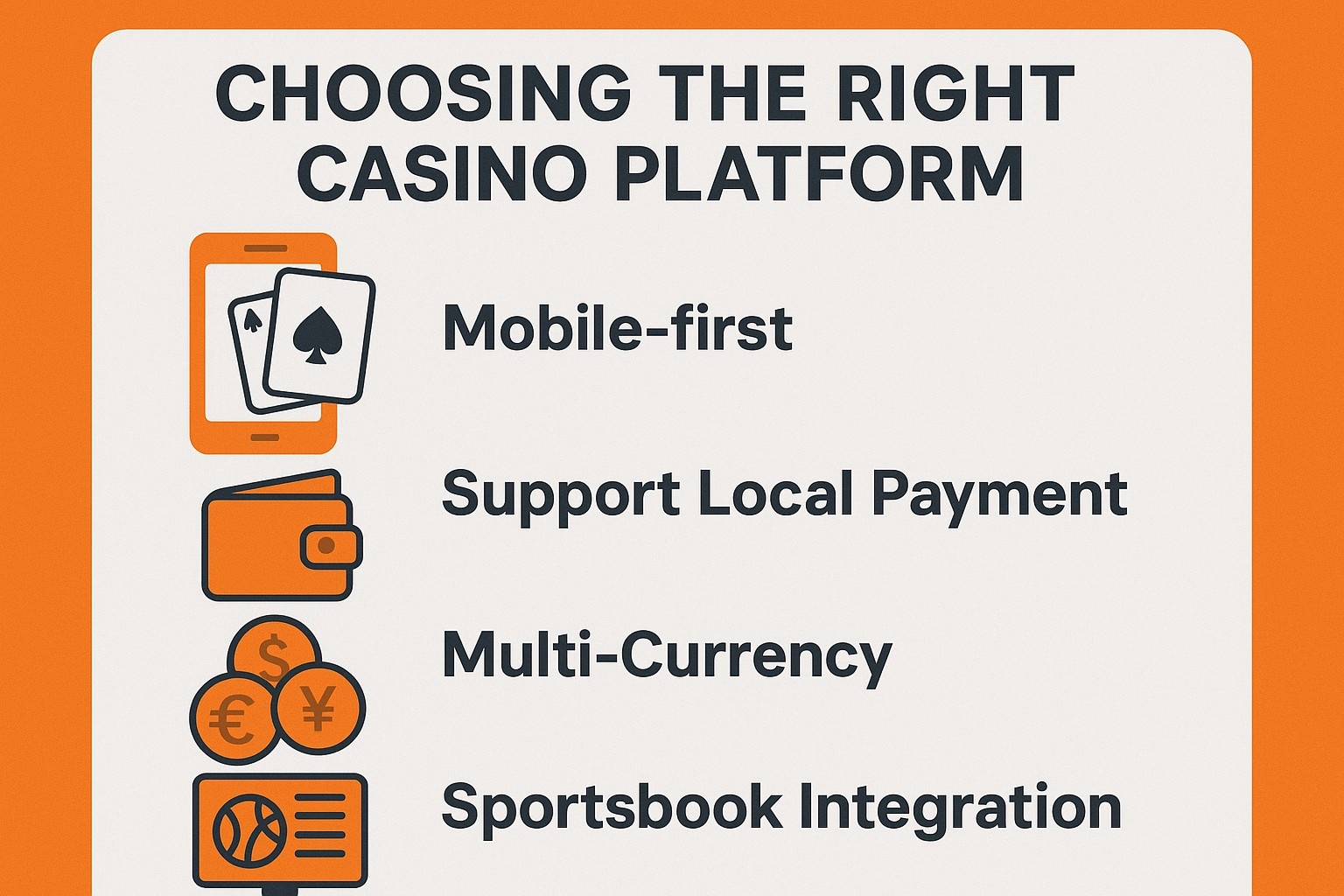
Launching in Mexico isn’t just about licensing and paperwork – it’s about running something that works locally. And that all starts with the platform you build on. Not every solution is designed for how players in Mexico actually play, pay, or interact. Here’s what to think about when choosing a platform that fits the market instead of fighting it.
Mobile-first, Always
Most users in Mexico play from their phones. Not tablets, not desktops – phones. If your casino isn’t built for small screens, fast loading times, and easy navigation on mobile networks, you’ll lose people before they even make a deposit. Look for a provider that’s already optimized for mobile UX, not one that treats it like an afterthought.
Support for Local Payment Systems
This part’s non-negotiable. Your platform needs to work with SPEI, CoDi, and DiMo – plus prepaid methods like OXXO and modern options like crypto. It’s not just about convenience. A lot of Mexican players don’t use international cards or traditional bank accounts, so if your checkout page only shows Visa and Mastercard, you’re going to tank conversion.
Multi-Currency + MXN-Friendly
Running everything in Mexican pesos (MXN) is the smoothest way to build trust and avoid headaches. Platforms that don’t support it usually require awkward currency conversion, which leads to fees, mistrust, and player drop-off. Make sure the backend handles MXN natively, including all bonus mechanics and reporting tools.
Sportsbook Integration (If It Applies)
If you’re planning to offer sports betting – and you probably should – double-check that the platform can handle live odds, local leagues, and event-based promos. Football (soccer) drives a huge chunk of online betting in Mexico, and you’ll need something that updates in real time and handles complex markets without crashing during peak hours.
Built-in Compliance Support
Mexican regulators want serious oversight on things like KYC, AML, player data, and fair play. Your platform should come with these tools baked in – not bolted on later. Look for certifications from labs like GLI, iTech Labs, or BMM, and make sure your provider actually understands what SEGOB expects during audits.
Bonus Engines and Loyalty Tools That Actually Matter
It’s not just about throwing free spins at people. You need tools that help you structure promos around Mexican holidays, sports events, or regional habits. Whether it’s Cinco de Mayo, Liga MX finals, or even Independence Day, flexible bonus mechanics let you tap into real behavior and build timely campaigns that feel local.
Experience in Latin America
This gets overlooked, but it shouldn’t. A provider that’s launched in Colombia or Brazil will likely “get” the regional quirks that others miss. Ask how many projects they’ve done in the region. See if they’ve worked with local payment gateways. If they’ve never operated outside of Europe, be cautious – they might not be ready for what the Mexican market actually demands.
Payments & Taxes: What You Need to Know
To operate in Mexico, you’ll need to support local payment methods – no way around it. Credit cards aren’t reliable here for gambling transactions, and many users don’t even have them. What works is SPEI (bank transfers), CoDi (QR-based payments), and DiMo (mobile payments via phone number). Cash-based options like OXXO Pay are also widely used. If your platform doesn’t support MXN and these systems natively, your conversion rates will suffer.
On the tax side, it’s simple but heavy. Operators pay 30% corporate income tax (ISR) and another 30% on Gross Gaming Revenue (IEPS) – which is the casino’s net win from wagers (rising to 50% from January 2026). You can deduct up to 20% of regional taxes from the IEPS amount, but it still adds up fast. Build tax reporting into your operations early. This isn’t a market where you can afford to guess.
Marketing & Advertising Rules in Mexico
Promoting an online casino in Mexico comes with clear legal boundaries. If you’re licensed, you’ve got space to market – but it has to be done carefully. The government takes a hard stance on gambling ads that mislead, overpromise, or target the wrong audience. Unlicensed operators aren’t allowed to advertise at all.
What You Can’t Do
Even if you’re fully licensed, there are strict limits. Violating any of these can result in fines or license issues.
- No targeting minors or placing ads on youth-oriented platforms
- No promises of guaranteed wins, fast money, or misleading odds
- No missing or hidden licensing details – permit number and responsible gambling messages are required
- No unlabelled affiliate or influencer promotions
- No advertising by unlicensed operators, through any channel
What’s Allowed (If You’re Licensed)
Licensed operators can advertise on most digital channels as long as they comply with advertising standards and transparency rules.
- Digital ads (Google, Meta) are allowed with proper age gating, certification, and prior SEGOB authorization
- Affiliates and influencers can be used if clearly disclosed and aimed at adults
- Social media ads must include your license number, 18+ icon, and a responsible gaming message
- Sponsorships with sports teams and cultural events are permitted
- Promotions and bonuses can be advertised if all terms are clearly visible
What Actually Works
Localized affiliate traffic still performs well – especially when tied to Spanish-language content or football-focused media. Influencer campaigns and sponsorships are also common, especially in the sports world. Social platforms like Facebook and Instagram tend to deliver better engagement in Mexico than in some heavily regulated European markets, but you still need certified accounts and clear compliance with platform policies.
Mexico’s ad landscape for gambling is strict but manageable – if you stay within the legal lines and focus on smart, local marketing that resonates with real users.
Conclusion
Starting an online casino in Mexico isn’t some quick launch-and-go project. It takes groundwork – legal, technical, and operational. You’ll need a local partner with a land-based license, a solid understanding of what the market expects, and a platform that actually fits the way players in Mexico spend, play, and think. That includes everything from payment integrations to the type of games you offer.
But for those willing to go through the process properly, the opportunity’s real. Mexico has scale, appetite, and a digital-first audience that’s already used to online play. The rules might feel uneven at times, and the licensing path can test your patience, but if you get it right, you’re not just entering a market – you’re setting up something that can run long-term and compete with global brands.
FAQ
1. Is it possible to get an online casino license directly in Mexico?
No, not directly. Mexico doesn’t issue standalone online casino licenses. The only way in is by partnering with a company that already holds a valid land-based gambling permit and applying for an online extension through SEGOB.
2. How long does it take to become operational?
If your documents are clean and your tech passes the audit, approvals can come through in three to six months. That said, timelines often stretch – especially if you’re dealing with new legal teams or waiting on SEGOB to respond.
3. Can foreign operators enter the market?
Yes, but only through a local partnership. You’ll either need to partner with, invest in, or acquire part of a Mexican company that already holds a land-based license. There’s no shortcut around that.
4. Are offshore platforms blocked in Mexico?
Not actively. The government doesn’t aggressively block foreign sites, which is why so many offshore casinos operate in a legal gray zone. But if you want to advertise, run local payments, or scale seriously, you’ll need to be fully licensed.
Related Articles

March 17, 2026Los principales eventos de afiliados del...
March 17, 2026Крупнейшие мероприятия в сфере игорного...