 Nothing found for the request


 Gaming software
 Platforms
 Sports betting
 Equipment
 Services
 Traffic
 Payment solutions
 Other products
 Additional Software
How to Start a Crypto Casino in a Practical, Real-World Way
Sologe December 8, 2025
Share:


A clear, practical guide that explains what you need to launch a crypto casino, from licensing and software to payments, security, and marketing.
Starting a crypto casino sounds exciting, but the process becomes a lot more manageable once you break it into real steps. You’re dealing with a mix of gambling rules, blockchain tech, payments, and software choices, so it helps to have a clear roadmap instead of guessing your way through it. The good news is that the whole idea isn’t as mysterious as it looks from the outside. Once you understand how these casinos actually work behind the scenes, you can make smarter decisions, avoid the usual traps, and build something that feels reliable for players from day one. Let’s take it from the top and walk through the basics.
What a Crypto Casino Actually Is
Before anything else, you need a grounded understanding of what you are trying to build. A crypto casino is an online gambling platform that uses cryptocurrencies for deposits, withdrawals, and sometimes even for running the games themselves. It sits somewhere between traditional online casinos and blockchain projects.
Most crypto casinos share a few core traits:
- Players use digital wallets instead of bank cards.
- Blockchain can verify fairness and store transaction data.
- Payments are fast, usually cheap, and often anonymous.
- The operator decides whether to run with a license, which affects trust and access to game providers.
Some casinos only accept crypto as a payment method while running a normal back end. Others go deeper, using provably fair algorithms or smart contracts.
The key thing to understand is that these platforms still work like casinos at their core. You’re still dealing with game providers, hosting, compliance, support teams, payment gateways, and marketing. Crypto doesn’t magically remove the hard parts. It just changes the tools.
How Crypto Casinos Work Behind the Scenes
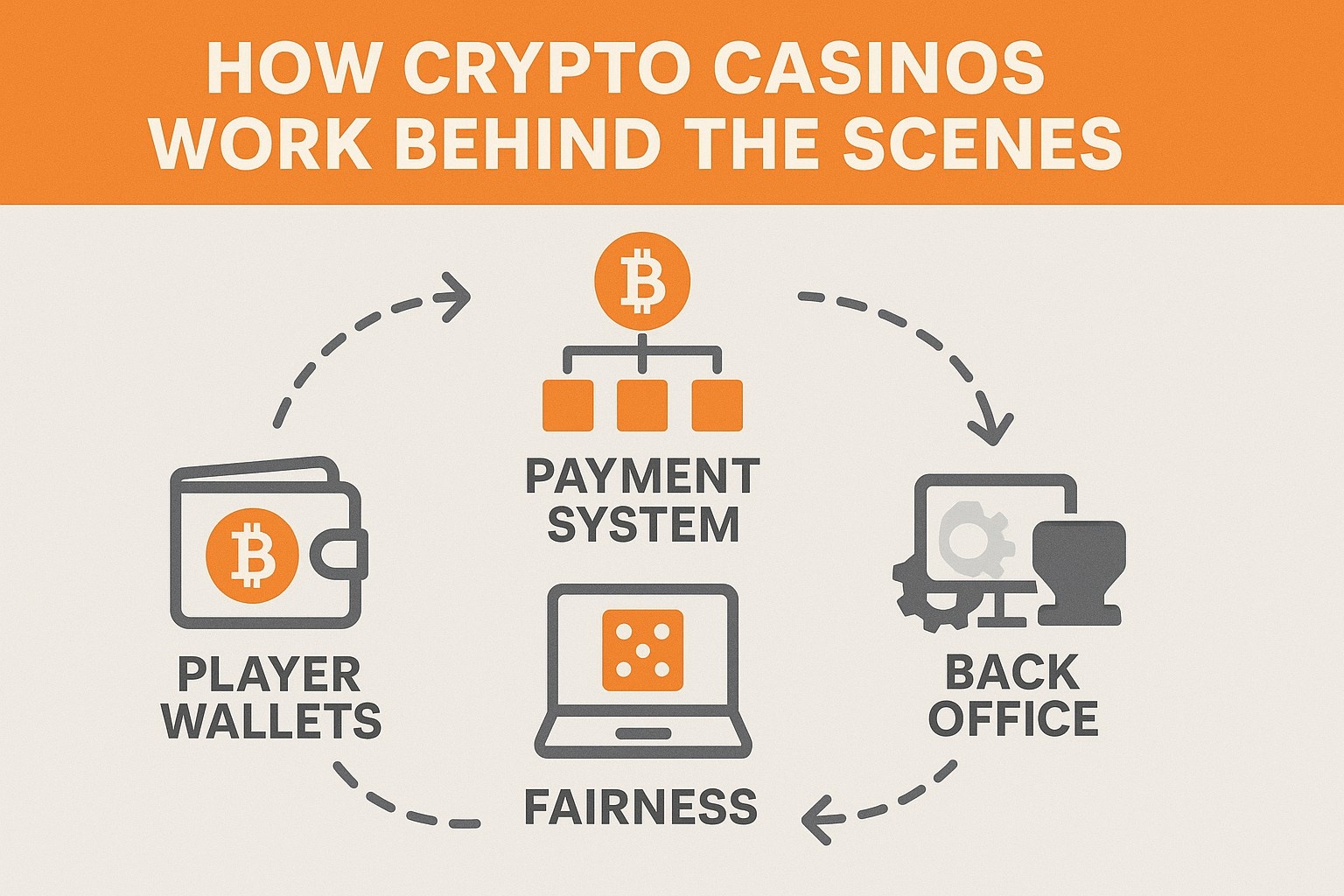
If you’ve never seen the inside of an iGaming platform, the whole thing looks mysterious. In reality, most crypto casinos follow the same structure as regular online casinos, with a few blockchain-specific elements added in.
Here’s a simple breakdown:
Player Wallets
Instead of typing in credit card details, players deposit coins to a casino wallet address. Most casinos generate a unique deposit address for each user to keep everything organized.
Payment System
Your platform needs a payment gateway that can read blockchain transactions in real time, confirm deposits, and send outgoing withdrawals safely. Some operators use third-party services. Others integrate directly with networks like Bitcoin or Ethereum.
Games and Fairness
Some casinos use regular RNG-based games from big providers. Others integrate blockchain-based games that come with provably fair verification. Many mix both.
Back Office
This is the control panel where you manage players, bonuses, transactions, risks, and reports. Without a solid back office, the whole operation becomes messy.
Smart Contracts (Optional)
A few advanced platforms use smart contracts to automate payouts or game logic. It’s not mandatory, but it adds transparency.
Crypto casinos are essentially normal online casinos powered by different rails. Once you understand this, the rest of the decisions become much easier.
Step 1: Get Clear on the Legal Side Before You Build Anything
A surprising number of operators jump straight into software purchases before checking whether they can legally operate in the regions they want to target. This is backwards. The legal foundation shapes everything else.
Crypto gambling rules vary widely from country to country. Some places regulate gambling heavily, some ban crypto outright, and others barely address the intersection at all. Your job is to understand where you plan to operate and what is required.
A few things to consider early:
- Will the casino operate with a license or as an offshore crypto-only platform?
- If licensed, which jurisdictions make sense for your budget?
- Do you want access to top-tier game providers? Most require a valid license.
- Will your target regions require KYC at certain transaction levels?
- Are local taxes applicable if you run a company in a specific country?
The most common licensing locations for crypto casinos include Curacao, Malta, Cyprus, Isle of Man, and Seychelles. Curacao is the most budget friendly and widely used, especially for new brands.
Running a casino without a license is possible in a purely crypto model, but it comes with limitations. Several reputable game providers will not supply content to unlicensed platforms. Many affiliates also avoid pushing unlicensed brands.
You don’t need to become a legal expert, but you do need clarity. A casino built on shaky legal assumptions doesn’t last long.
Step 2: Decide What Type of Casino You Want to Build
Once the legal side is clear, it’s time to shape the actual business model. Crypto casinos come in a few varieties, and each has its trade-offs.
- Fully crypto-based: All payments are in digital currencies. No fiat involvement. Popular among players who want high privacy.
- Hybrid casinos: Accept both fiat and crypto. Requires stronger compliance but attracts a larger audience.
- Blockchain-native casinos: Games run on blockchain or smart contracts. Usually offer provably fair verification. Smaller game selection compared to traditional providers.
- White-label or ready-made casinos: Fast launch, lower cost, but less customization.
- Fully custom development: Expensive and time-consuming but great for unique brands.
When you choose a model, you’re not just picking features. You’re choosing your audience, marketing direction, and operational workload. A fully anonymous casino needs strong automation. A licensed hybrid casino needs a full compliance structure. Decide early so you don’t waste money going back and forth between systems.
Step 3: Choose Your Software Provider Carefully
Running a casino is a technical job. You need stable servers, smooth game loading, secure crypto handling, and a clean dashboard for daily operations. Most new operators don’t build all this from scratch. They choose between:
- White-label crypto casino platforms
- Turnkey casino software
- Custom-built solutions
- API-based modular systems
When you compare software providers, ignore the flashy demos for a moment and look at how the platform actually performs. You need something stable during busy hours, quick with withdrawals, and stocked with games players actually care about. It also helps if the back office feels simple to navigate, supports multiple cryptocurrencies, and comes with solid security tools and clear reporting. And don’t forget mobile performance – a lot of players never use anything else.
Many first time operators pick the cheapest option or fall for a nice looking theme, and it usually backfires. A casino’s reputation depends on smooth gameplay and fast payouts. If those fail, everything else falls apart. The stronger providers usually offer big name games from studios like Pragmatic Play, NetEnt, Evolution, and Hacksaw Gaming, which instantly makes your platform feel more trustworthy.
Step 4: Set Up Cryptocurrency Payments the Right Way
Your payment system needs to handle the basics without fuss, meaning it should generate deposit addresses, confirm incoming transactions, process withdrawals quickly, and store funds safely. Most operators rely on a combination of hot wallets for everyday payouts, cold storage for long term protection, and sometimes a third-party processor to streamline the workflow. Automated withdrawal scripts are also common, but there’s usually some level of human oversight to prevent mistakes or suspicious activity.
You’ll also need to choose which cryptocurrencies to support. Bitcoin and Ethereum are almost always included, but many casinos add coins like Litecoin, Bitcoin Cash, Ripple, or Dogecoin. Stablecoins such as USDT and USDC have become especially popular because they keep players’ balances steady instead of bouncing around with the market. Some casinos even make stablecoins their default currency just to avoid constant value swings during gameplay.
One reassuring part of crypto payments is that chargeback fraud isn’t an issue, which removes one of the headaches traditional casinos deal with. Still, that doesn’t mean security becomes optional. The safest operators use a mix of cold storage, strict access controls, and regular audits to make sure player funds stay protected at all times.
Step 5: Build a Security Framework You Can Actually Maintain
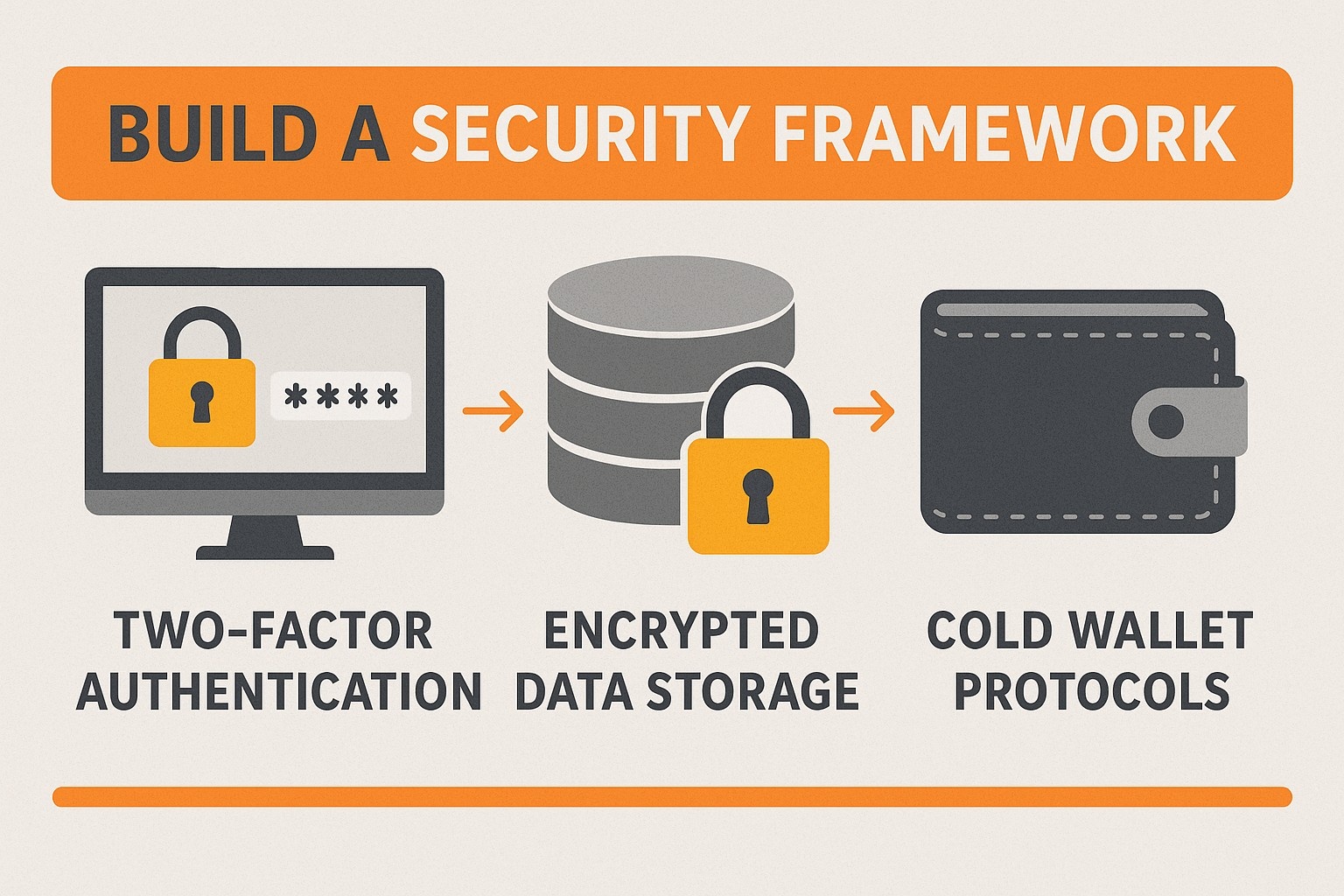
Security is where many first-time operators underestimate the workload. Crypto casinos are attractive targets for hackers because transactions are irreversible. Even one weak link can cause heavy damage.
A smart approach includes:
- Two-factor authentication
- Encrypted data storage
- Cold wallet protocols
- DDoS protection
- Regular vulnerability testing
- Safe withdrawal limits
- Staff access controls
Remember, a casino doesn’t need to be perfect, but it must be solid enough to withstand automated attacks. The number of attempted breaches on gambling sites is often much higher than new operators expect.
Step 6: Build a Player Experience That Feels Good, and Don’t Ignore Compliance
Design and compliance might seem like completely separate things, but they both shape how your casino feels the moment someone lands on it. Players just want something that loads quickly, looks clean, and has enough games to keep them interested. Big hitters like slots and live tables still carry most of the traffic, but crypto players also love fast games like crash or dice. Mixing both gives you a healthier balance and makes the casino feel more alive.
On the compliance side, even crypto-only casinos can’t just look the other way. You still need basic identity checks for bigger transactions, tools that help players set limits, and proof that your games are actually fair. None of this has to turn your operation into a mountain of paperwork. You just need enough structure that regulators, affiliates, and players feel comfortable trusting your brand. A casino that cares about compliance tends to feel safer, and safety really matters when real money is involved.
Step 7: Have a Real Marketing Plan and Treat Operations Like an Everyday Job
Show Up Where Your Players Actually Are
Marketing and daily operations blend together more than most new operators expect. You can build a great looking casino, but if nobody sees it, nothing else matters. Crypto players usually want transparency and a sense of who’s behind the brand, so your marketing needs to feel real, not stiff or corporate. Think about where you’ll show up, how you’ll talk to your audience, and which affiliates or partners you want to work with. A clear plan from day one makes everything easier.
Be Ready for the Everyday Work
The moment players start signing up, the behind-the-scenes work begins. You’ll be answering support questions, checking documents, watching deposits and withdrawals to make sure everything looks normal, adding new games, and fixing whatever feels off. Promotions and bonuses also need regular tuning so they stay attractive without hurting your margins. A casino isn’t something you set up once and walk away from. It’s a daily operation, and the more organized you are, the smoother everything runs.
Step 8: Don’t Scale Until Your Base Is Solid
A lot of casinos try to expand the moment they see a small bump in traffic, and that usually causes more chaos than progress. Growth is great, but it only works when your foundation is actually stable. Make sure your systems are reliable and your team can handle the workload before you start adding new features.
When you’re ready, there are plenty of ways to scale. You can bring in more game studios, add different cryptocurrencies, target new regions, or build loyalty features and mobile apps. Just take it step by step. Growing slowly but steadily keeps everything under control, and that usually leads to a much healthier casino in the long run.
Mistakes to Avoid When Starting a Crypto Casino
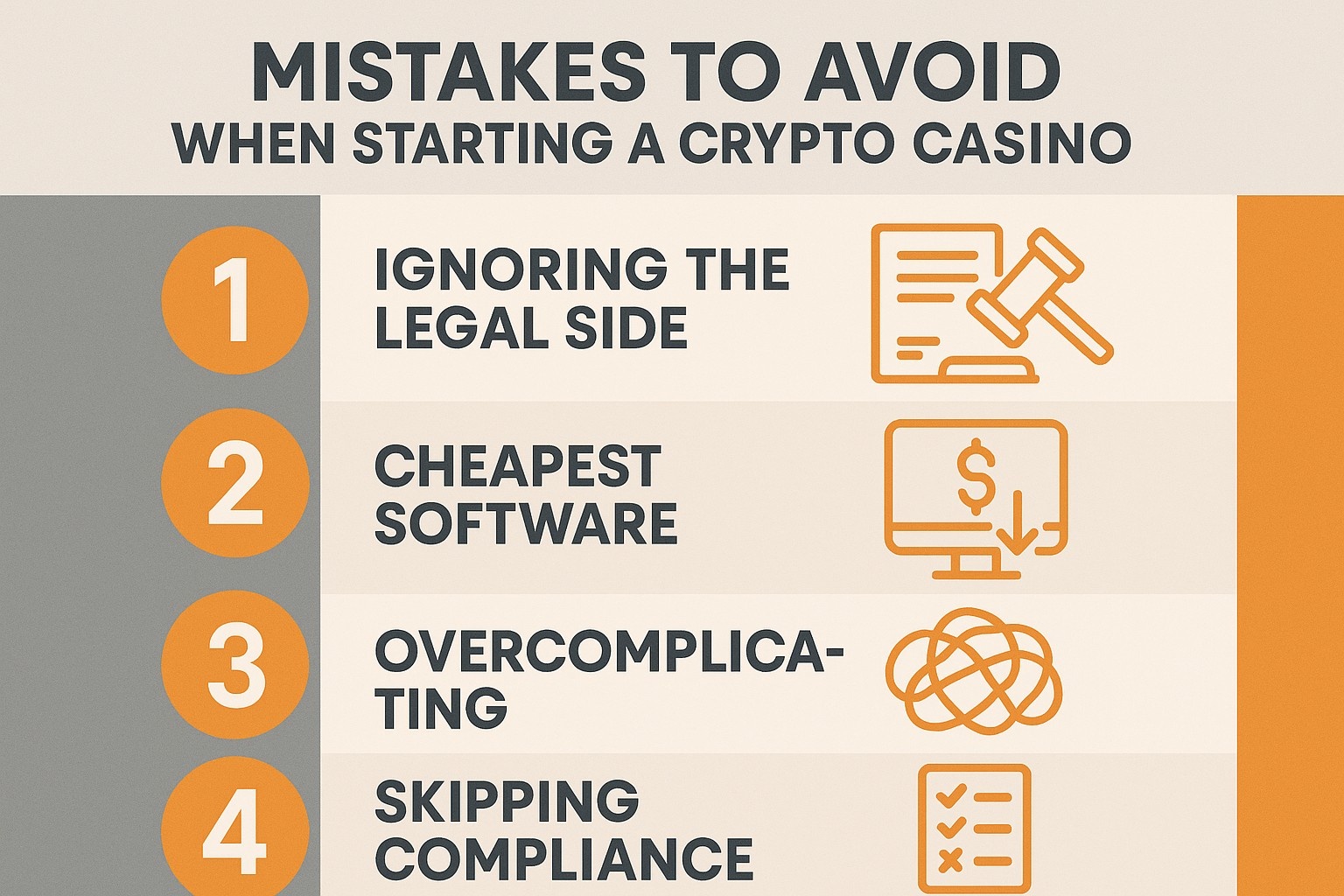
Even with a solid plan, it’s surprisingly easy to fall into traps that slow you down or drain your budget. Most of these mistakes come from rushing, guessing, or assuming crypto casinos work the same way as traditional online casinos. They don’t. Here are the slipups worth dodging from the very beginning.
1. Ignoring the Legal Side Until It’s Too Late
A lot of new operators focus on design and software first, then try to sort out the legal requirements afterward. That’s backwards. Licensing affects your access to game providers, payment systems, and even your marketing options. If you wait too long, you’ll end up rebuilding half your operation. Getting clarity on regulations, licensing, and compliance early saves months of trouble later.
2. Choosing the Cheapest Software Instead of the Most Reliable
It’s tempting to pick the lowest priced platform or the one with flashy graphics, but cheap software almost always costs more in the long run. Slow spins, buggy games, unreliable withdrawals, and downtime push players away instantly. Crypto users especially have zero patience for technical issues. Stable, well maintained software should be a top priority, even if it costs more upfront.
3. Overcomplicating the User Experience
Some operators try to impress players with overloaded interfaces, too many menu options, or designs that look great in a designer’s portfolio but terrible on a phone. Players want speed and clarity, not a maze. Keeping things clean and easy to navigate wins every time, especially for mobile users who make up a huge chunk of the traffic.
4. Skipping Compliance Because “It’s Crypto”
One of the biggest myths is that crypto casinos don’t need compliance or KYC. They do. Even offshore platforms need basic identity checks for large transactions, AML protections, and responsible gaming tools. Skipping these puts your casino at risk, scares off affiliates, and damages trust among players. Compliance doesn’t have to be heavy, but it can’t be ignored.
5. Launching Without a Real Marketing Plan
Many casinos go live with no marketing strategy, assuming players will stumble in on their own. They won’t. Crypto players follow strong communities, trusted influencers, and real conversations. Without proper marketing, even the best casino remains invisible. A thoughtful plan built around affiliates, content, and community engagement is essential.
6. Scaling Too Fast Before Fixing the Basics
Once traffic starts picking up, operators often rush to add new features, markets, or cryptocurrencies. Expanding too quickly is a common way to break your platform. Fix small issues before adding new ones. Reliable operations always beat rapid, chaotic growth.
Final Thoughts
Starting a crypto casino isn’t something you throw together in a weekend. It’s a real business that mixes technology, regulations, and gambling mechanics. But with a structured approach, it becomes much more manageable. If you take time to understand the market, choose the right software, build solid security, and organize your operations, you can create a stable platform in a space that’s still growing fast.
It’s one of the few online industries where a motivated newcomer can still compete with big brands. The difference between success and failure usually comes down to preparation, patience, and choosing the right partners.
If you build it right from the start, a crypto casino can turn into a long-term, sustainable business rather than a short-lived experiment.
FAQs
How much does it cost to start a crypto casino?
The cost varies wildly depending on the route you take. A white label setup can start on the lower end, while a fully custom platform with licensing, design, and large game libraries can reach into higher budgets. Most operators spend the bulk of their money on software, licensing, payment systems, and marketing. It’s better to plan a realistic budget instead of trying to build the cheapest possible casino, because reliability matters more than anything else.
Do I need a gambling license to run a crypto casino?
Not always, but it depends on your business model. Purely crypto based casinos sometimes launch without a license, but they lose access to reputable game providers and face limited marketing opportunities. Licensed casinos have more credibility, more game options, and fewer legal risks. Curacao and the Isle of Man are common choices for new operators because of their lower costs and faster approval times.
What cryptocurrencies should my casino support?
Most casinos start with Bitcoin and Ethereum because they’re widely used, but adding Litecoin, Bitcoin Cash, USDT, or USDC helps attract players who want faster transactions or stable value. Stablecoins in particular are becoming popular because they prevent balance fluctuations during gameplay.
How long does it take to launch a crypto casino?
A white label platform can go live in a few weeks. A fully custom build can take several months depending on your design, features, and the number of game providers you want. Licensing timelines also vary by jurisdiction. The more prepared you are with documents, content, and branding, the faster everything moves.
Do I need technical skills to run a crypto casino?
Not really. Most of the heavy lifting is handled by your software provider. You should still understand the basics of blockchain payments, security, and analytics, but you don’t have to be a developer. What you do need is the ability to manage operations, marketing, player support, and compliance.
Related Articles

March 17, 2026Los principales eventos de afiliados del...
March 17, 2026Крупнейшие мероприятия в сфере игорного...