 Nothing found for the request


 Gaming software
 Platforms
 Sports betting
 Equipment
 Services
 Traffic
 Payment solutions
 Other products
 Additional Software
How to Start a Casino in Australia: A Real-World Guide
Sologe December 9, 2025
Share:


A clear, grounded guide on how to start a casino in Australia, covering the laws, offshore licensing, setup steps, and what operators should know before launching.
Starting a casino in Australia sounds big and exciting, but the reality is a bit more nuanced. The country has one of the strongest gambling cultures in the world, yet the rules around online casinos are strict enough to confuse even seasoned entrepreneurs. Still, people launch successful casino businesses every year by using the right structure, picking a proper offshore license, and understanding how the local laws actually work.
This guide walks through the basics in a simple, down to earth way. No hype, no legal jargon that makes your eyes glaze over. Just a clear look at what’s allowed, what isn’t, and how operators actually get things off the ground in the Australian market.
The Legal Landscape: What You Can And Can’t Do
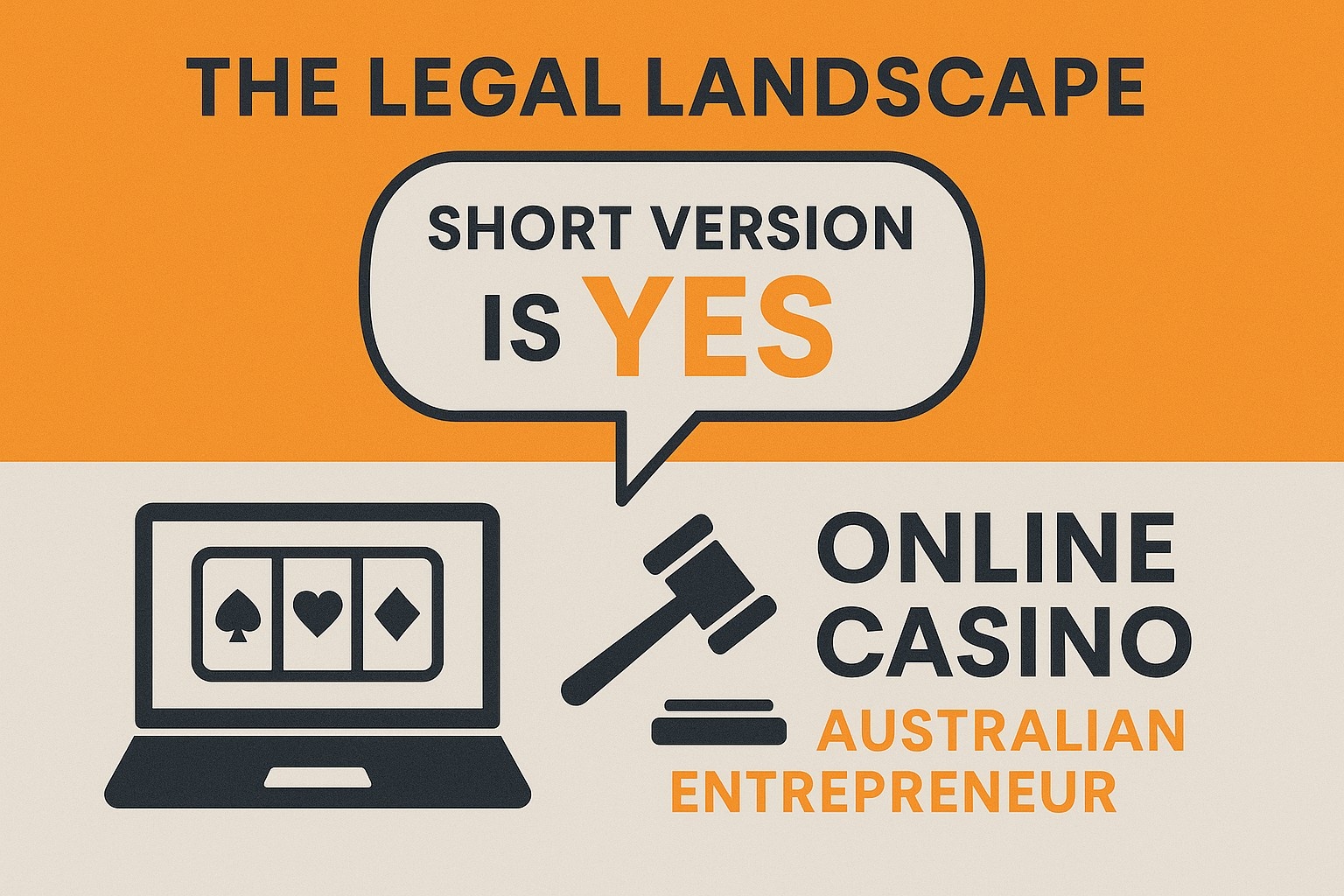
Let’s start with the question everyone asks first: is it even legal to start an online casino in Australia?
The short version is yes, but not the way most people imagine.
Australia’s Interactive Gambling Act puts a hard stop on offering online casino games like slots, blackjack, roulette, or poker to Australian residents. Whether your company is based inside or outside the country doesn’t matter. If someone living in Australia can access and play your casino, you’re breaking the law. And the penalties are no joke.
But here’s the part many newcomers don’t expect. You can build an online casino as an Australian entrepreneur. You just can’t let Australians play on it.
That’s the entire model. You set up the business legally, get a license overseas, and serve international markets. It might feel counterintuitive at first, but it’s been the norm for years and is completely legal when done correctly.
Once you understand that you’re building a casino from Australia, not for Australia, things become much more manageable.
Why People Still Enter the Industry
You might look at those restrictions and think, why even bother? The reality is that the global online gambling market is huge, far bigger than the Australian slice. And because gambling is already part of the local culture, many Australian entrepreneurs are familiar with the environment and comfortable with how the industry operates.
On top of that, offshore licensing is both legal and widely used worldwide. Australia isn’t unique in this setup. Plenty of countries allow their citizens to run gambling businesses as long as they are not targeting local players.
So while you can’t serve Aussies, the rest of the world is very much open for business.
Looking Beyond Australia: Choosing Your Target Markets
Once you understand the legal boundaries, the next step is figuring out where you want your casino to operate. This part takes some genuine thinking. Not every country accepts online casinos, and even in places where it’s allowed, the rules vary a lot.
This is where you ask questions like:
- Are players in that region comfortable with online payments?
- What games do they gravitate toward?
- Do they prefer simple slots, live dealer tables, or fast crash games?
- How strong is the competition?
- What languages and currencies do they expect?
Markets like India, Mexico, Brazil, Colombia, and several African regions are known for their growth and player engagement. Europe has heavy regulation but high value. Each target zone comes with its own culture, habits, and expectations, so you’ll want to tailor your decisions around the people you’re hoping to attract.
Think of it like opening a restaurant. You don’t serve the same menu everywhere. You adapt to what people like and what makes them comfortable.
Picking the License That Fits Your Business
Since Australia doesn’t offer online casino licenses for domestic players, you’ll need one from a different jurisdiction. This is standard in the industry and not nearly as complicated as it might sound.
Licenses vary in cost, credibility, and processing time. Anjouan remains the fastest and most budget-friendly option for new operators, while Curacao is undergoing major regulatory reform that has increased complexity and timeframes. Malta, Isle of Man, and Kahnawake sit at the higher end of the spectrum but carry strong reputations.
The only Australian-issued license for offshore-facing operations is the Northern Territory Internet Gaming Licence (which prohibits targeting Australians), but due to high costs (approx. AUD $29,000 application fee) and complex requirements, it is generally not used by new operators.
Your license determines which markets you can operate in, so don’t rush this part. It’s better to choose something that fits your long-term goals rather than whatever is cheapest or fastest on paper.
Setting Up the Company Behind the Casino
After the licensing direction is clear, you register your company. Sometimes it happens in the same country where you apply for the license, sometimes not. You’ll go through identity checks, financial verification, and a decent amount of bureaucracy.
None of it is glamorous, but it’s standard in a highly regulated industry.
Many operators lean on platform providers for help here. They either guide you through the paperwork or prepare most of it for you, which saves a ton of time and frustration, especially if you’re dealing with international jurisdictions.
Choosing How Your Casino Will Be Built
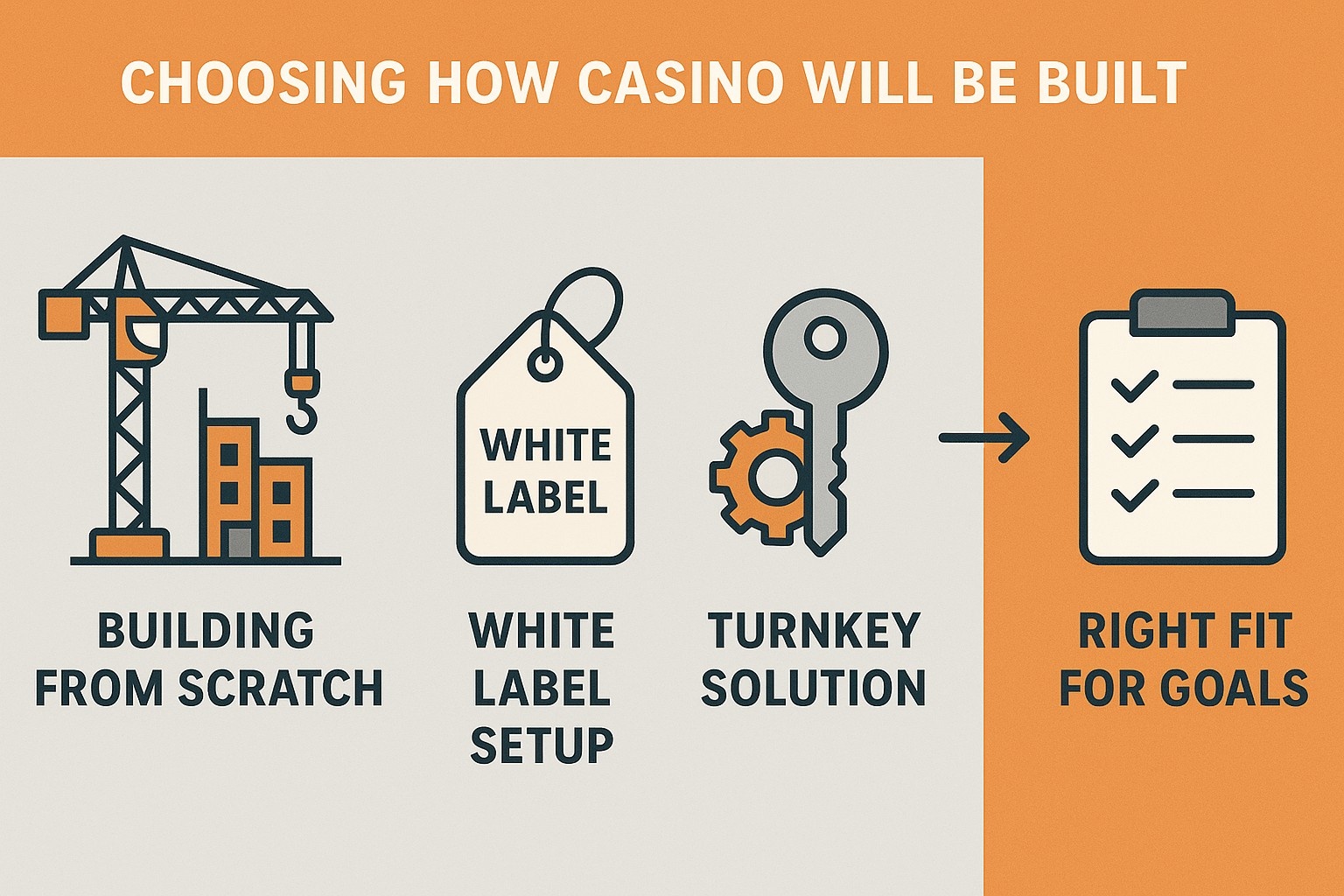
Once the structure of the business is in place, the next big decision is how the actual casino platform will be created. There isn’t one perfect answer here. It really depends on your timeline, your budget, and how much control you want over the final product.
Building Everything From Scratch
Some operators like the idea of a fully custom platform. It gives you room to design every feature, every screen, and every little detail the way you picture it. The trade-off is that this route is slow, expensive, and demands a team to keep everything running smoothly afterward. It’s similar to building your own house. It’s unique, it’s yours, and it can be fantastic, but it’s definitely not the fastest or cheapest option.
Going With a White Label Setup
Most first-time operators choose something simpler. A white label casino is basically a ready to go platform where the technical side is already handled. You add your brand, pick your games, set up your payments, and you can launch pretty quickly. It’s reliable, cost effective, and avoids the classic headaches that come with building everything from square one.
Choosing a Turnkey Solution
Turnkey sits somewhere in the middle. The platform is mostly ready, but you still get deeper control and flexibility than you would with a white label setup. It’s a good balance for operators who want a personalized feel without waiting months for development.
Finding the Right Fit for Your Goals
The easiest way to think about these options is to compare them to opening a shop. You can design and build the entire building, or you can rent a space that already has power, plumbing, and walls. One gives you total freedom, the other gets you open faster. What matters most is how soon you want to launch and how much you’re comfortable investing into custom work.
Filling Your Casino With Games Players Actually Enjoy
After picking the platform, it’s time to load it with games. This is where your target market research pays off. Players in different regions gravitate toward different styles of play. Some love traditional table games. Others want fast, simple games like Crash or Mines. Live dealer titles are incredibly popular nearly everywhere.
You’ll usually partner with a game aggregator to get access to a wide library instead of negotiating with dozens of providers individually. It’s faster, cleaner, and far more efficient.
Payments follow the same logic. People trust what they already use. In some markets, cards dominate. In others, e-wallets are the norm. Crypto is growing fast, but it isn’t accepted everywhere. The key is making deposits and withdrawals feel smooth. Nothing kills a casino faster than slow or confusing payouts.
Getting Your Compliance Tools in Place
Even if your casino operates under an offshore license, you can’t ignore compliance. Every reputable regulator expects you to have proper systems in place to verify players, track financial activity, and stop anything that looks suspicious. It’s not just about ticking boxes. These tools protect your business just as much as they protect the players.
You’ll need reliable ways to confirm player identities, monitor unusual transactions, and detect patterns that might point to fraud or money laundering. On top of that, responsible gambling features are becoming standard everywhere. Things like self exclusions, deposit limits, spending reminders, and activity reports help players stay in control, and regulators take these features very seriously.
Most modern casino platforms bundle many of these systems right into the backend, which makes life easier. But they still need to be configured properly, updated regularly, and supported with clear internal procedures. Compliance also means keeping accurate records in case your licensing jurisdiction asks for audits or documentation later on.
It’s definitely not the flashiest part of running a casino, but it might be the most important. A strong compliance setup keeps regulators confident, players comfortable, and your business safe from issues that could derail it before it even gets going.
Creating a Marketing Strategy That Actually Works

Launching a casino is exciting, but attracting real players is the part that makes or breaks the business. The online gambling space is crowded, so you’ll need a few different approaches working together rather than relying on just one idea.
A good marketing plan usually combines several methods, such as:
- SEO and long-term content to bring in steady organic traffic.
- Affiliate marketing, which is one of the most powerful acquisition channels in iGaming.
- Influencer partnerships when you’re targeting markets where social media drives player behavior.
- Promotions and bonuses that are appealing but still realistic for your budget.
- Localized campaigns that fit the rules and culture of each specific target country.
Not every region handles gambling advertisements the same way, so part of the job is adjusting your approach based on what you’re legally allowed to promote.
And here’s the part experienced operators always point out: getting new sign ups is nice, but keeping players is where the real value is. Returning players become the backbone of a successful casino. Reliable customer support, fast withdrawals, transparent rules, and a platform that simply feels trustworthy all play a huge role in keeping people around.
Going Live and Smoothing Out the Edges
Eventually, the moment arrives. The website is up, the games are loaded, the payment methods are working, and everything looks ready.
But smart operators don’t open the floodgates immediately. They do a quiet launch, test real traffic, watch how players move through the site, and fix anything that feels off.
Every new casino has small issues at the beginning. Maybe a payment method acts up. Maybe a bonus isn’t triggering the way it should. Maybe certain games need adjusting. These things are normal, and the more carefully you fix them early on, the smoother your long-term growth will be.
Keeping the Casino Running Day After Day
Running an online casino isn’t something you set up once and forget about. It’s a living platform. Games need to be updated, new content gets added, tools evolve, fraud attempts appear, and players expect quick support.
Some operators treat their casino like a full-time job. Others lean heavily on their software provider, who handles most of the maintenance. Both approaches work as long as there is consistency. In this industry, a stale or slow-moving casino loses players fast.
A Few Common Mistakes to Avoid
Because this is meant to be a real-world guide, it’s useful to point out a few mistakes that trip up new operators more often than you’d expect. Most of them come from moving too fast or assuming the iGaming world works like any other online business.
- Trying to accept Australian players through loopholes. ACMA catches this every time, and the penalties are nothing you want to deal with.
- Choosing the cheapest license without understanding the limits. Low budget jurisdictions can restrict the markets you’re allowed to target, which can hold you back from day one.
- Underestimating the work required for marketing and player retention. Getting sign ups is easy. Keeping players engaged is where most of the effort goes.
- Rushing the launch and skipping platform testing. If you don’t stress test payments, bonuses, and core gameplay, you’ll end up fixing problems while real players are already on the site.
Avoiding these early mistakes won’t guarantee instant success, but it gives you a much stronger foundation than many operators who jump in without a clear plan.
Final Thoughts
Starting a casino in Australia isn’t about gaming the system. It’s about understanding how the rules work and building your business around them. Once you accept the offshore model, everything becomes more straightforward.
You pick a good license, choose a platform that fits your goals, add games and payments that speak to your target players, and put real effort into running and promoting the casino. It takes time, patience, and ongoing care, but the opportunity is there for anyone willing to approach it with a level head.
FAQ
Is it actually legal to start an online casino in Australia?
Yes. What isn’t legal is offering online casino games to Australian residents. As long as your platform targets players in other countries and follows the rules of your chosen licensing jurisdiction, you can operate a casino business as an Australian entrepreneur without breaking local law.
Can I get an Australian license for an online casino?
Not for serving Australians. There’s no Australian license that lets you run online slots or table games for locals. The only exception is the Northern Territory license, and even that is for offshore-facing businesses. If your plan involves online casino games, you’ll need an overseas license such as Curacao, Malta, Isle of Man, or Anjouan.
Where do most Australian operators get licensed?
It depends on the budget and how quickly they want to launch. Curacao and Anjouan are common for first-time operators because they’re affordable and fast. More established brands often choose Malta or Isle of Man for their credibility, especially if they plan to enter regulated European markets.
Do I need to live overseas to run an offshore casino?
No. You can live in Australia and run the business legally, as long as you don’t target Australian residents. You’ll register a company in your licensing jurisdiction and follow their regulations, but your physical location doesn’t need to change.
How much does it cost to start an online casino?
There’s no fixed number because the cost depends on your license, platform type, payment integrations, game library, and marketing. Many new operators start in the lower six figures, while custom-built casinos with high-end licenses can run significantly higher.
Related Articles

March 17, 2026Los principales eventos de afiliados del...
March 17, 2026Крупнейшие мероприятия в сфере игорного...