 Nothing found for the request


 Gaming software
 Platforms
 Sports betting
 Equipment
 Services
 Traffic
 Payment solutions
 Other products
 Additional Software
What to look for when selecting games from providers
Sologe December 14, 2025
Share:


Explore key specs like RTP, volatility, bonus features, and device support when evaluating games from providers. Here’s what matters — and what doesn’t.
If you’re browsing games from providers thinking “a slot is a slot,” think again. Under the surface, there’s a full stack of specs that can make or break performance — for both players and platforms. Whether you’re uploading titles or building your portfolio, knowing what to filter for isn’t optional — it’s the backbone of smart curation.
Start with the structure
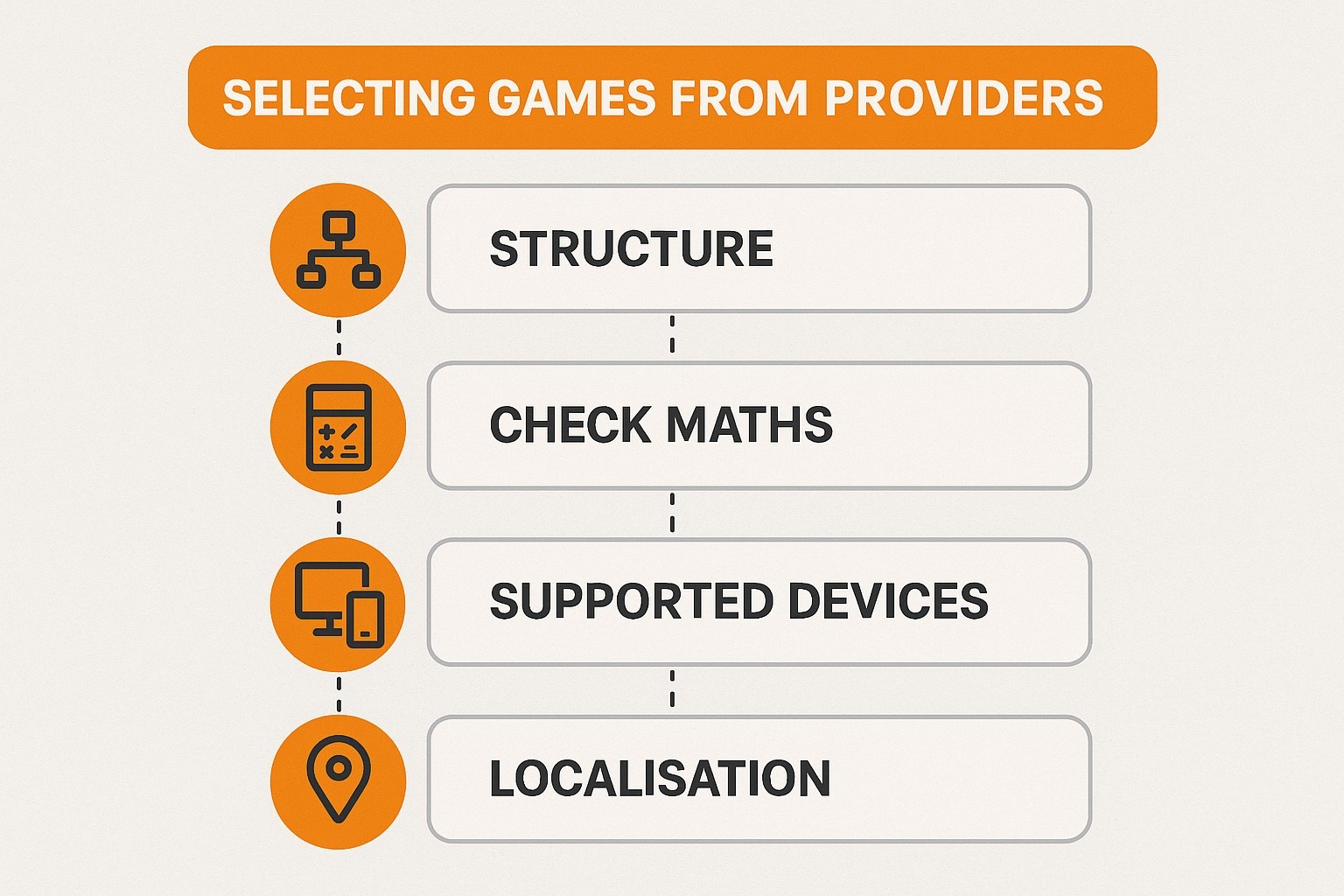
First, lock in the game type or category — slot, table game, poker, or something more niche like crash or instant win. Each serves a different kind of player. Pair it with a layout that works: the classic 3×5 setup and 25 lines still dominate for a reason — they’re familiar, reliable, and easy to localise.
Check the maths
The Return to Player Percentage (RTP) and volatility level (low, medium, or high) tell you a lot about how a game behaves — and how it earns. A 97% RTP means 97% of all bets go back to players, while the remaining 3% is the operator’s revenue. Sounds small? Not really. If you lower RTP too far — say, to 60% — your theoretical margin might look bigger, but players will lose fast, stop playing, and that “40% profit” becomes 40% of nothing. In reality, a balanced RTP keeps players engaged and sessions longer, which translates into more sustainable returns. Pair that with the right volatility — high for thrill-seekers, low for bonus hunters — and you’ve got a maths model that works for both sides. Smart operators tune these numbers to match their retention goals without killing the fun.
Supported devices and user flow
A polished game today has to work flawlessly across supported devices: mobile and desktop. Lag, crashes, or bad UX? Immediate skip. Bonus points for demo availability, which helps players test before they commit.
Compliance and localisation
Never skip the back-end checks. Games with the right certificates, languages supported, and currency supported (including crypto) make expansion easier and save headaches later. These are the specs that unlock markets — and margins.
Features and performance boosters
It’s not just about how the game looks. What players actually chase are bonuses like wild, bonus wheel, and free spins — paired with features such as jackpots and tournaments that give games real staying power. Combine that with thoughtful limits — say, a min bet = 0.01 EUR and a max bet = 5 EUR, with a maxX = x555 and a maxWin (maxExpo) = 2,775 EUR — and you’ve got a setup that appeals to both casual players testing the waters and grinders chasing big payouts.
Final filter: release timing
You’re scrolling through listings and see a release date: Jan. 2025. It’s easy to overlook — but it’s a quiet green flag. A recent launch often means the game was built with today’s tech stack, supports modern compliance, and hasn’t already saturated the market. It might not have buzz yet, but it’s got runway — and that’s an edge worth considering.
Filtering games based on visuals alone is a fast track to underperformance. But when you factor in specs like return to player percentage, volatility level, supported devices, certificates, and bonus features, you’re not just browsing — you’re curating. Choose wisely, and your platform’s results will reflect it.
Related Articles

March 17, 2026Los principales eventos de afiliados del...
March 17, 2026Крупнейшие мероприятия в сфере игорного...