 Nothing found for the request


 Gaming software
 Platforms
 Sports betting
 Equipment
 Services
 Traffic
 Payment solutions
 Other products
 Additional Software
How to choose the right card payment method for your gaming platform
Sologe December 14, 2025
Share:


Learn how to evaluate card payment methods by reviewing supported regions, restricted regions, supported currencies, deposit and withdrawal options, roll reserve, and chargeback protection to avoid costly mistakes.
Card payments are still the go-to choice for online gaming transactions — thanks to their familiarity, speed, and global reach. But for operators, they’re not as simple as they look. Behind every swipe, tap, or digital entry lies a layered structure of risk, cost, and compliance requirements.
If you’re integrating a new payment method for card transactions, you need to go beyond “does it work?” The real questions are: which card types are supported? Are chargebacks covered? What’s the roll reserve? And are you actually allowed to operate in your target regions?
Get it wrong, and you risk blocked payments, regulatory issues, or profit loss due to high fees and fraud. Get it right, and card payments can become one of your most stable, scalable tools for revenue growth.
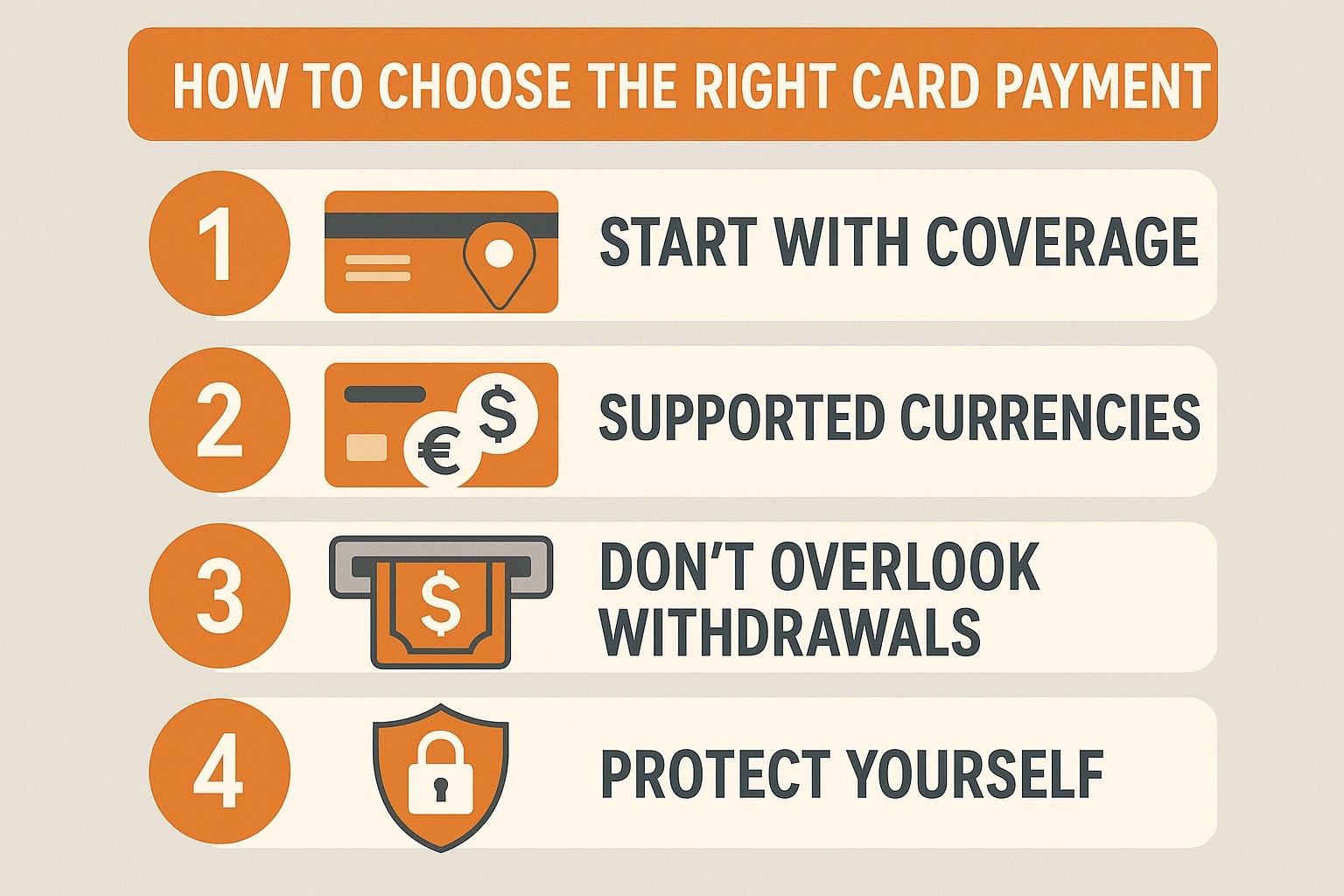
Start with the payment method and coverage
First, identify the payment method name — whether you’re working directly with card networks like Visa or Mastercard or through third-party aggregators. Understanding which card types are supported (credit, debit, prepaid) helps you align with your target demographic’s spending habits.
Next, review the supported regions. Many providers are strong in Europe and North America, but less reliable in markets like Africa, Southeast Asia, or LATAM. Just as critical is checking restricted regions — areas where regulations or card schemes limit or prohibit gaming transactions altogether.
Supported currencies and transactional scope
To cater to international players, your gateway should list all supported currencies. The broader this list, the fewer barriers players face during checkout — meaning more deposits, fewer drop-offs, and better player retention.
If deposits are supported (and they should be), confirm the minimum/maximum deposit thresholds. A range like 1$–20,000$ is ideal for accommodating both casual users and high-rollers. Then, look at the deposit commission. Even a small fee, if passed to the player, can influence their willingness to transact — especially in competitive markets.
Don’t overlook withdrawals and reserve policies
Not all card processors allow withdrawal back to the same card. If yes, the minimum/maximum withdrawal should mirror deposit limits — again, ideally 1$–20,000$. List the withdrawal commission clearly. In gaming, payout transparency is key for trust and repeat engagement.
Also examine the roll reserve — the portion of funds the provider withholds temporarily to offset fraud or chargeback risk. High reserve percentages can choke your operating cash flow, so negotiate or plan accordingly.
Protect yourself from chargebacks
One of the biggest threats in card-based payments is chargebacks. Fraudulent claims, friendly fraud, or disputes can stack up quickly. Look for chargeback protection services that flag risky transactions, automate documentation, and reduce your liability.
Some gateways offer proactive fraud scoring, while others provide reimbursement coverage — both can save thousands in lost revenue and admin hours.
Related Articles

March 17, 2026Los principales eventos de afiliados del...
March 17, 2026Крупнейшие мероприятия в сфере игорного...