 Nothing found for the request


 Gaming software
 Platforms
 Sports betting
 Equipment
 Services
 Traffic
 Payment solutions
 Other products
 Additional Software
Betting feeds decoded: what matters beyond the odds
Sologe December 14, 2025
Share:


Four essentials for a reliable betting feed: wide sports coverage, trusted data, low latency, and a transparent subscription model — keeping odds sharp and bettors happy.
A betting feed is more than odds moving across a screen; it’s the data pipeline that keeps every price, market, and settlement accurate. Choose the wrong feed and you end up with lags, mismatched scores, and angry punters. Choose the right one and you unlock smoother trading, sharper risk control, and happier customers. Below is a concise guide to the four factors that matter most.
Breadth begins with supported sports & leagues
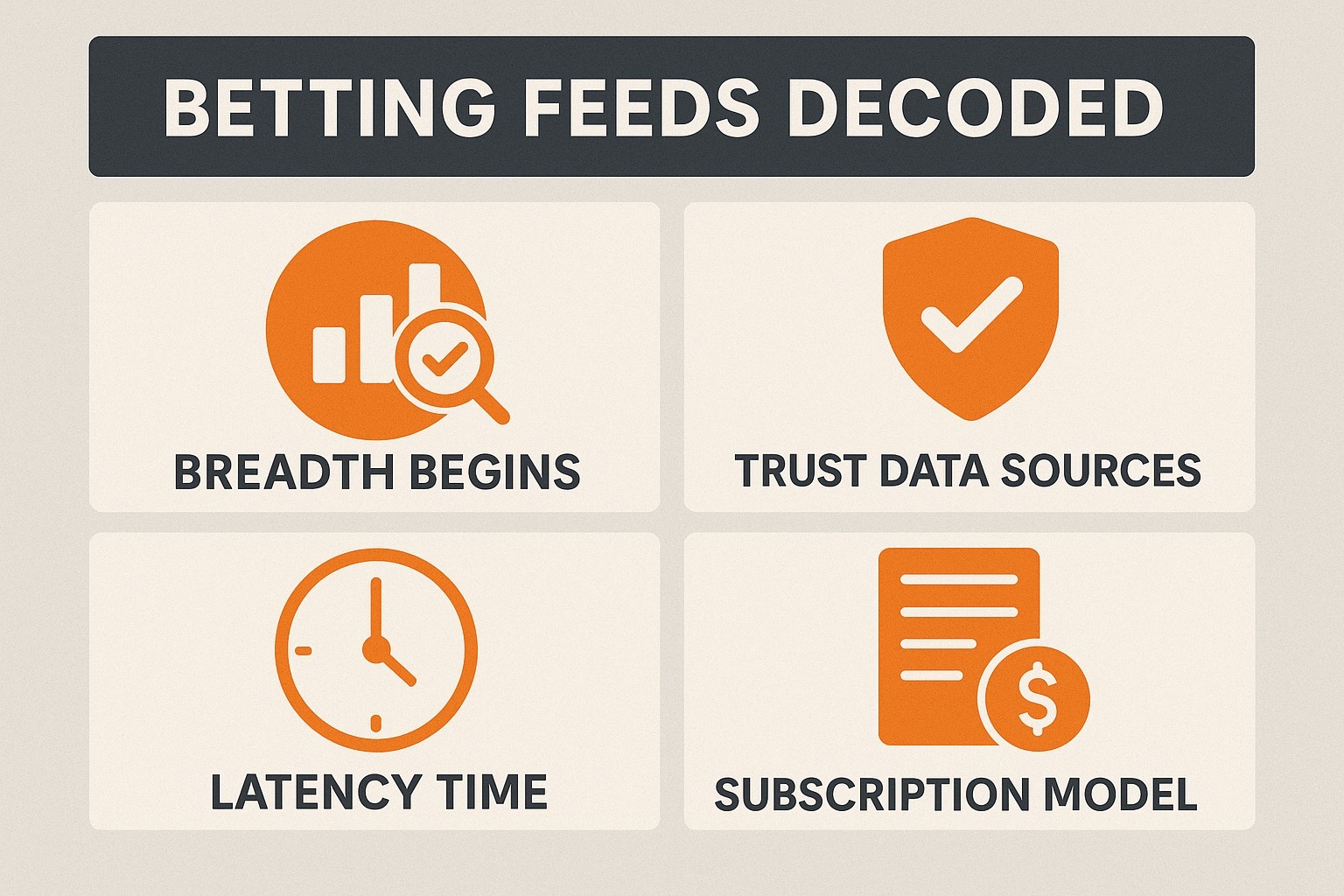
The first checkpoint is how many competitions a feed actually covers. A good service lists mainstream football, basketball, and tennis, but the best feeds drill down to second tiers, youth leagues, and niche events. The wider the supported sports & leagues, the fewer gaps you have to patch with secondary suppliers.
Trust the data sources, trust the feed
Odds are only as good as the information behind them. Look for feeds that draw from official venues, accredited scouts, or direct league partnerships. Transparent data sources reduce manual corrections, protect against match-fixing rumours, and keep compliance officers content.
Latency time decides your edge
In-play trading lives on speed. A feed with a 300 ms delay can still push markets ahead of TV broadcasts, but anything slower and your traders become spectators. Measure latency time from stadium to platform, not just server to server, and insist on millisecond-level reporting during peak traffic.
Know the subscription model before you scale
Pricing isn’t just a cost — it’s a scalability test. Some feeds charge a flat monthly fee; others bill per event, per league, or per call. A clear subscription model helps forecast margins and plan expansion without hidden surcharges when you add new territories or sports.
The takeaway is that choosing a betting feed is partly a technology decision and partly a risk strategy. Verify the coverage, question the data trail, test latency in live conditions, and pick a pricing structure that scales with you. Get those four elements right and the feed will disappear from daily conversations — the surest sign it’s doing its job.
Related Articles

March 17, 2026Los principales eventos de afiliados del...
March 17, 2026Крупнейшие мероприятия в сфере игорного...