 Nothing found for the request


 Gaming software
 Platforms
 Sports betting
 Equipment
 Services
 Traffic
 Payment solutions
 Other products
 Additional Software
How to Start an Online Casino in Canada Without Guesswork
Sologe December 9, 2025
Share:


Starting an online casino in Canada feels exciting, but once you look under the hood, you realize it’s not as simple as buying a domain and adding a few games. Canada has a patchwork of provincial rules, a booming gray market, and one regulated pathway that actually allows private operators to run legally: Ontario’s iGaming framework. On top of that, you still need the right software, strong compliance tools, and a plan for attracting Canadian players who already have countless offshore platforms to choose from.
This guide walks you through the essentials in a grounded, no-nonsense way. Think of it as the version someone would give you over coffee, not a corporate flyer. You’ll see what it really takes to get licensed, what shortcuts people use, and how to avoid the usual mistakes that cost new operators time and money.
Canada Isn’t One Market, It’s Ten Plus Three
Before you spend a dollar on software or licenses, you need to understand the biggest truth about operating here: Canada doesn’t have one national online gambling system. Everything is split by province. That means Ontario has its own rules, British Columbia has its own rules, Quebec has its own rules, and so on.
What this creates is a patchwork where some provinces have their own government websites, others allow very limited forms of gambling, and only Ontario has opened the doors to private casino operators. That’s why most operators either aim for Ontario specifically or run offshore and target Canadians without being based in the country. There’s no such thing as a “Canada license” for online casinos.
Once you accept this, everything starts making more sense.
Choosing Your Path: Ontario, Kahnawake, or Offshore
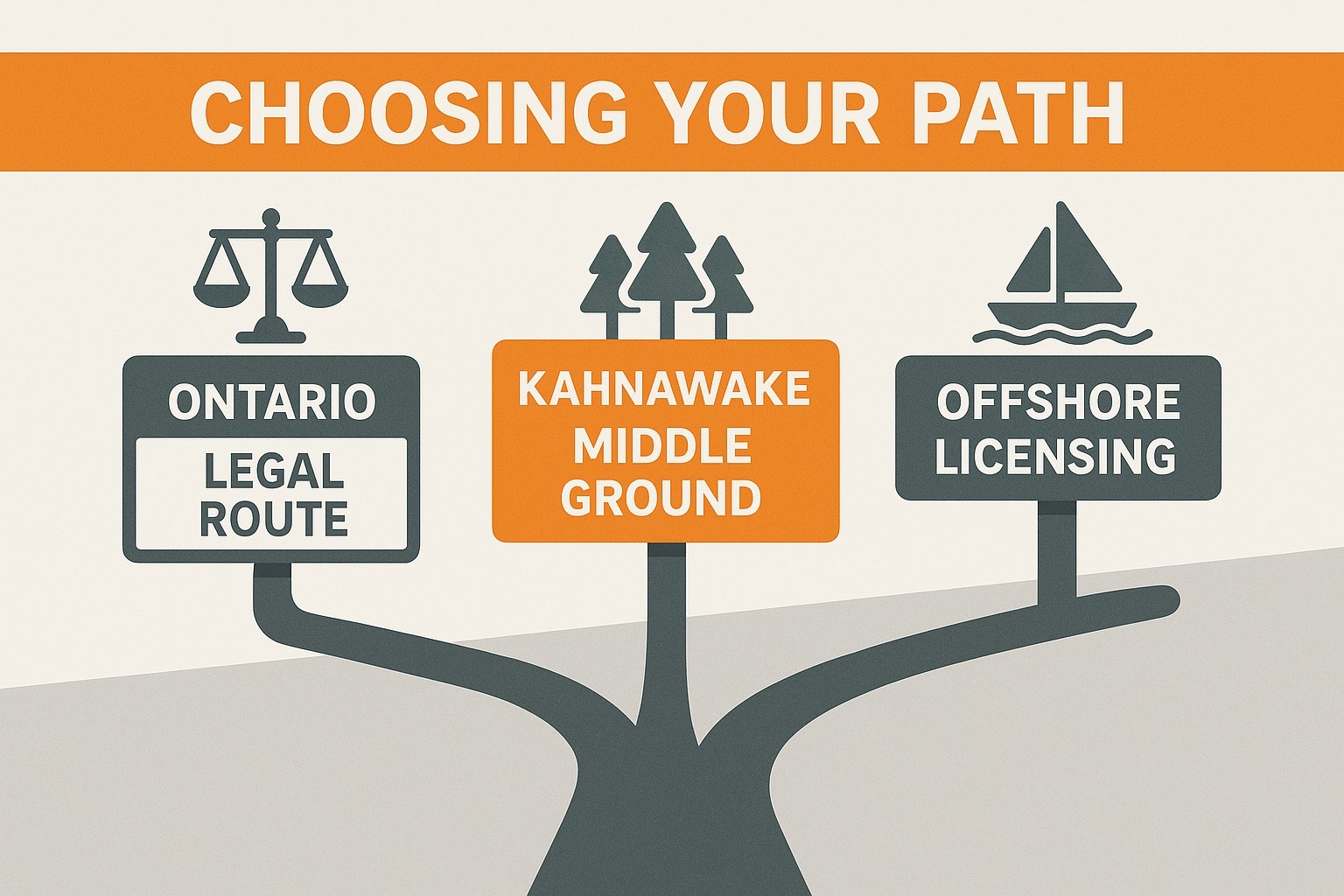
Figuring out how you want to operate in Canada is the part that shapes everything else. Before you think about games, branding, or payment systems, you need to know which regulatory path you’re taking. Each one has its own personality, its own demands, and its own long-term implications. Once you sort this out, the rest of the planning becomes much clearer.
1. Ontario: The Only Fully Legal Route for Private Operators
If your goal is to operate inside Canada with full regulatory approval, Ontario is the one province that actually lets private companies run online casinos. The province rolled out its regulated iGaming system in 2022, and it has grown into one of the biggest online gambling markets in North America.
The process isn’t a quick, rubber-stamp license. Ontario uses more of a partnership model. First you register with the Alcohol and Gaming Commission of Ontario (AGCO), and then you sign an operating agreement with iGaming Ontario (iGO). Those two entities stick with you for the long run, overseeing how you operate, how you handle player safety, and how you report financial activity.
It’s a serious oversight. You need proper AML procedures, independent testing for your platform, reliable reporting systems, and a willingness to treat compliance as part of your daily operations. But if you pull it off, the payoff is big. Ontario gives you credibility, trust, and access to a regulated market that keeps growing.
2. Kahnawake: A Canada-Based Middle Ground
Not every operator is ready for the weight of Ontario’s system, and that’s where the Kahnawake Gaming Commission comes in. Kahnawake is a First Nations territory near Montreal with its own regulator, completely separate from the provincial framework. It has been issuing online gambling licenses since the late 90s, long before most provinces even considered the idea.
The Kahnawake Gaming Commission operates from the Mohawk Territory of Kahnawake. The KGC license is often used as a jurisdiction physically located within Canada but legally separate from provincial regulations, which makes it a unique, stable choice for operators serving the Canadian grey market.
There’s one limitation worth stressing: a Kahnawake license does not give you legal access to Ontario’s regulated market. It’s mainly used by casinos that serve Canadians more broadly, especially those operating in the gray zone outside provincial systems.
3. Offshore Licensing: Still a Major Force in the Market
Even with new regulations popping up, offshore licensing remains a huge part of how casinos enter the Canadian market. A large number of operators hold licenses from places like Curacao, Malta, Gibraltar, the Isle of Man, or Cyprus. Each jurisdiction has its own rules, and some are much stricter than others, but they all offer one thing Canada doesn’t: the ability to run internationally without dealing with province-by-province approval.
For many operators, offshore licensing is the fastest and most flexible way to launch. But there are strings attached. You can’t advertise yourself as being legally regulated in Canada. Some provinces block payments to offshore casinos. And while players rarely face legal consequences, operators must be comfortable working in a gray area rather than a fully recognized Canadian framework.
If your long-term plan is to build a trusted brand in Canada, an offshore license can be a starting point, but it’s usually not the final stop.
Figuring Out Which Option Fits Your Goals
When you boil everything down, you really have three paths:
- Go fully regulated in Ontario.
- Build a Canadian-facing operation under Kahnawake.
- Launch offshore and serve Canadians from abroad.
There isn’t a universal “best” choice. It depends on what you want out of the business. Ontario gives you legitimacy but requires heavy compliance. Kahnawake gives you a Canadian foothold with fewer hurdles. Offshore gives you speed and flexibility but less long-term stability.
A lot of operators start with Kahnawake or offshore licensing just to get moving, learn the market, and refine their brand. Once they grow and feel ready, some move toward Ontario when they want to operate on a fully regulated level.
If you want, I can now rewrite the next section or continue with the article’s flow.
The Licensing Process, Without Sugarcoating It
Whether you’re applying in Ontario or offshore, the licensing stage sets the tone for the rest of your casino’s life. You’ll be asked for corporate documents, ownership information, financial disclosures, AML policies, platform details, and anything regulators need to verify that you’re running a safe and honest operation.
Ontario requires far more documentation than most offshore jurisdictions, and getting your platform tested by an approved lab is mandatory. Offshore regulators are usually faster, but even then, you’re expected to maintain compliance once you go live.
If you’ve never built a business with regulatory oversight before, expect a bit of a learning curve. Licensors care less about how pretty your site looks and more about how responsibly your back end is built.
Choosing a Platform That Can Actually Handle the Canadian Market
The Canadian market isn’t made up of beginners. Players here already know what a good casino looks like, and many of them have spent years jumping between offshore sites that offer slick interfaces and tons of games. If your platform feels slow, clunky, or bare bones, they won’t stick around long enough to give it a chance.
When you’re choosing your platform, try to look past the surface. A nice theme or a few trendy games won’t save you if the back end can’t keep up. What really matters is whether the platform can operate smoothly day after day without turning into a headache.
A solid platform for the Canadian market should offer things like:
- Integration with Interac, which is basically a must for local players
- Built-in KYC and fraud detection tools that actually work instead of causing endless false flags
- Stable mobile performance, since most players here use their phones more than desktops
- Support for both English and French, especially if you plan to market to Quebec
- A clean, intuitive lobby with well known providers instead of random filler games
- The technical flexibility to pass independent testing if you aim for Ontario later
- Reporting tools that won’t make you want to pull your hair out when regulators ask for details
A good platform should feel like something you can grow with, not something you’ll outgrow six months after launch. If it feels sturdy, scalable, and reasonably future proof, you’re on the right track.
Payments Canadians Actually Use
One thing you learn quickly about the Canadian market is that Interac is king. If you launch without it, you’re basically making life harder for yourself and your players. Credit cards, PayPal, and ewallets matter too, but Interac is the go-to method for everyday transactions.
If you’re operating offshore, cryptocurrency support becomes more common, but even then, convenience wins. Players stick with casinos that let them pay easily, withdraw quickly, and avoid unnecessary friction. A fast payout is worth more to the average player than a flashy bonus.
Security Isn’t Optional
Running an online casino means dealing with money, personal information, and constant attempts to cheat the system. You’ll need encryption, secure logins, monitoring tools, and responsible gaming features. Regulators expect you to verify player identities, watch for suspicious patterns, and address risky behavior before it turns into a problem.
Even offshore jurisdictions expect this now, and players absolutely notice when a casino cuts corners. A secure setup isn’t something that makes your casino special. It’s something that keeps you out of trouble.
Filling Your Casino With Games Canadians Actually Want
The Canadian audience is picky in the best possible way. They’ve spent years exploring offshore casinos, testing different game providers, and figuring out what feels fair and what doesn’t. If your casino doesn’t feel familiar or doesn’t offer enough variety, most players won’t stick around long enough to see what else you offer.
In general, the games that perform well here come from recognized studios, the kind players already trust. Live dealer content is massive. Fast paced crash games draw in a younger crowd. And if your licensing setup allows it, sports betting often becomes a natural extension of the experience.
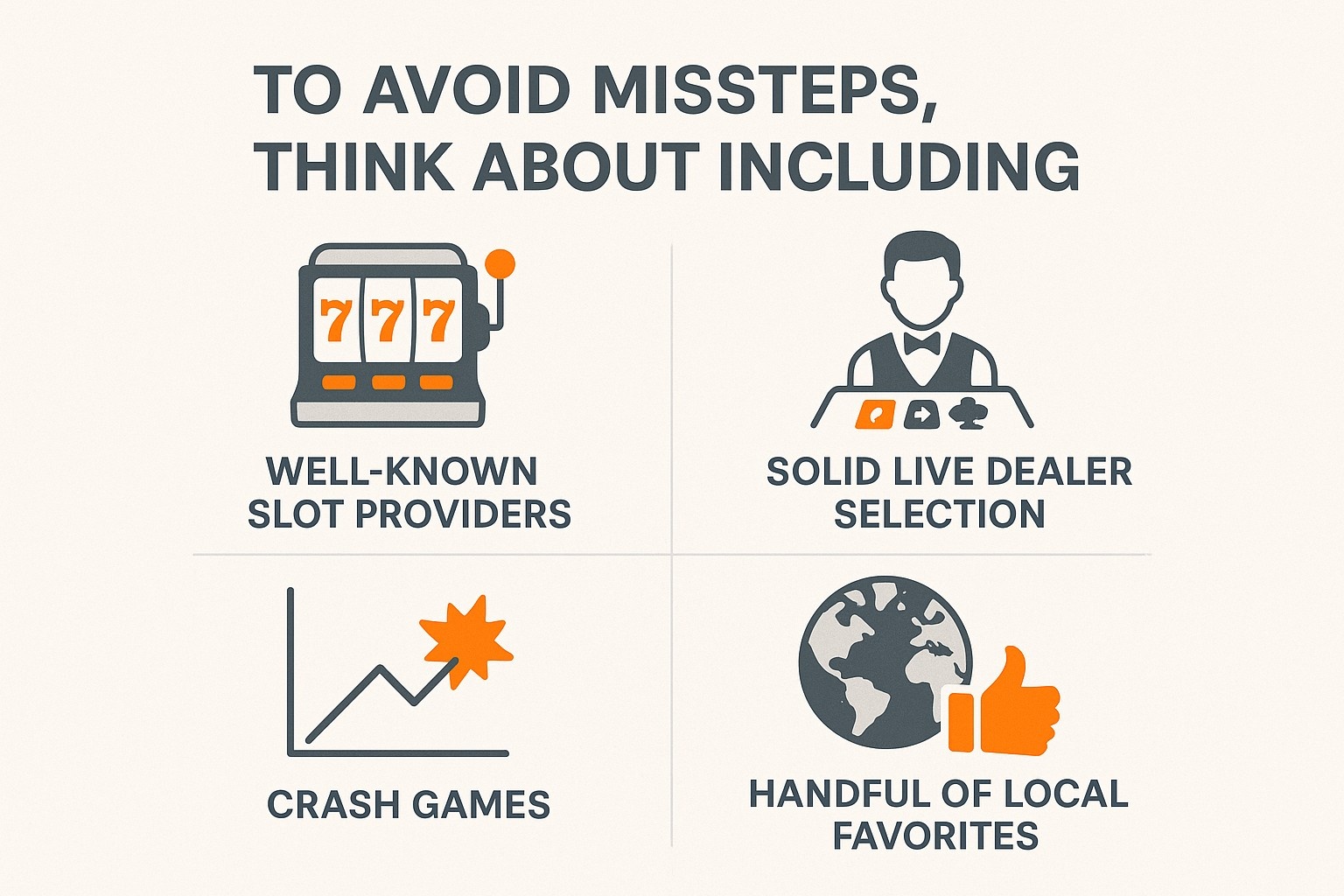
To avoid missteps, think about including:
- Well known slot providers that Canadians already recognize
- A solid live dealer selection, especially blackjack, roulette, and baccarat
- Crash games and instant play titles for players who like quick sessions
- A handful of local favorites, as long as your providers offer them
- Sports betting options if your license gives you permission
- A few newer or trending titles to keep things fresh without overwhelming players
If you try to cut corners by filling your lobby with cheap or unfamiliar games, players notice within minutes. Quality isn’t just a selling point here. It’s one of the easiest ways to build trust.
Marketing That Works in Real Life, Not Just in Theory
Anyone who has spent time in the gambling industry knows that marketing is where new operators either succeed or disappear. Canadian players have seen every bonus, every flashy offer, and every “huge jackpot” headline. None of that moves the needle anymore unless the experience behind it is actually good.
Transparency helps more than people think. Clear bonus terms. Real explanations. Straightforward messaging. Players appreciate casinos that talk like actual humans instead of corporate robots.
SEO is still important, especially if you’re focusing on Canada-specific keywords. Affiliates remain one of the strongest channels, though they can be pricey. And if you’re entering Ontario, pay attention to AGCO advertising rules. They’re stricter than many operators expect, and you can’t rely on gimmicky promos to get attention.
The Part Nobody Talks About Enough: Ongoing Compliance
Launching a casino is one thing. Running it day to day is a completely different job. Players need support, suspicious activity has to be flagged, KYC checks don’t stop after registration, and payout requests pile up if your systems aren’t built properly.
Ontario requires frequent reporting and continuous monitoring. Offshore regulators expect regular audits. And even if you’re not in a regulated Canadian market, players will judge you based on how quickly you respond and how fairly you handle disputes.
A lot of operators underestimate how much time this takes. The ones who succeed build processes early instead of scrambling later.
Final Thoughts: Canada Is Worth It, But Only With a Clear Plan
If you’re still reading, you probably already see that starting an online casino in Canada isn’t something you can do impulsively. The market is valuable and growing fast, but the rules are different depending on where and how you want to operate.
Ontario is strict but rewarding. Kahnawake is stable and Canada-friendly. Offshore gives you speed and reach. Each option works for different goals, and the smartest operators pick the path that matches their budget, experience, and appetite for compliance.
The real secret is not trying to “hack” the system. Canada is moving toward clearer rules, not looser ones. If you approach the market with patience, honesty, and decent infrastructure, you’re already ahead of half the operators who try to jump in without understanding how the country works.
If you want, I can help you expand this into a full guide with FAQs, a step-by-step checklist, costs, or a comparison between licensing options.
FAQs
Is it actually legal to start an online casino in Canada?
Yes, but with conditions. Only Ontario currently allows private operators to run online casinos inside the province. Other provinces operate their own government-run platforms and don’t issue licenses to private companies. Many casinos that serve Canadians operate offshore or under the Kahnawake Gaming Commission.
How long does it take to launch an online casino in Ontario?
Expect anywhere from 6 months to over a year. Ontario requires testing, registration, AML documentation, financial reviews, and an operating agreement with iGaming Ontario. It’s not something you can rush through.
Do I need a Canadian company to operate in Ontario?
Interestingly, no. Ontario doesn’t require operators to incorporate in Canada, but you do need to meet all AGCO and iGaming Ontario requirements, including data access, AML controls, and ongoing reporting.
Can a Kahnawake license replace an Ontario license?
Not for Ontario. A Kahnawake license is respected and widely used for Canada-facing casinos, but it doesn’t give you legal access to Ontario’s regulated iGaming market. It’s a separate path altogether.
Is offshore licensing still a viable option for Canada?
Yes, and many casinos take this route. Licenses from Curacao, Malta, Gibraltar, and similar jurisdictions are still widely used. Just remember that offshore operators aren’t recognized by Canadian provinces and operate in a gray zone.
Related Articles

March 17, 2026Los principales eventos de afiliados del...
March 17, 2026Крупнейшие мероприятия в сфере игорного...